Film Noir Photography
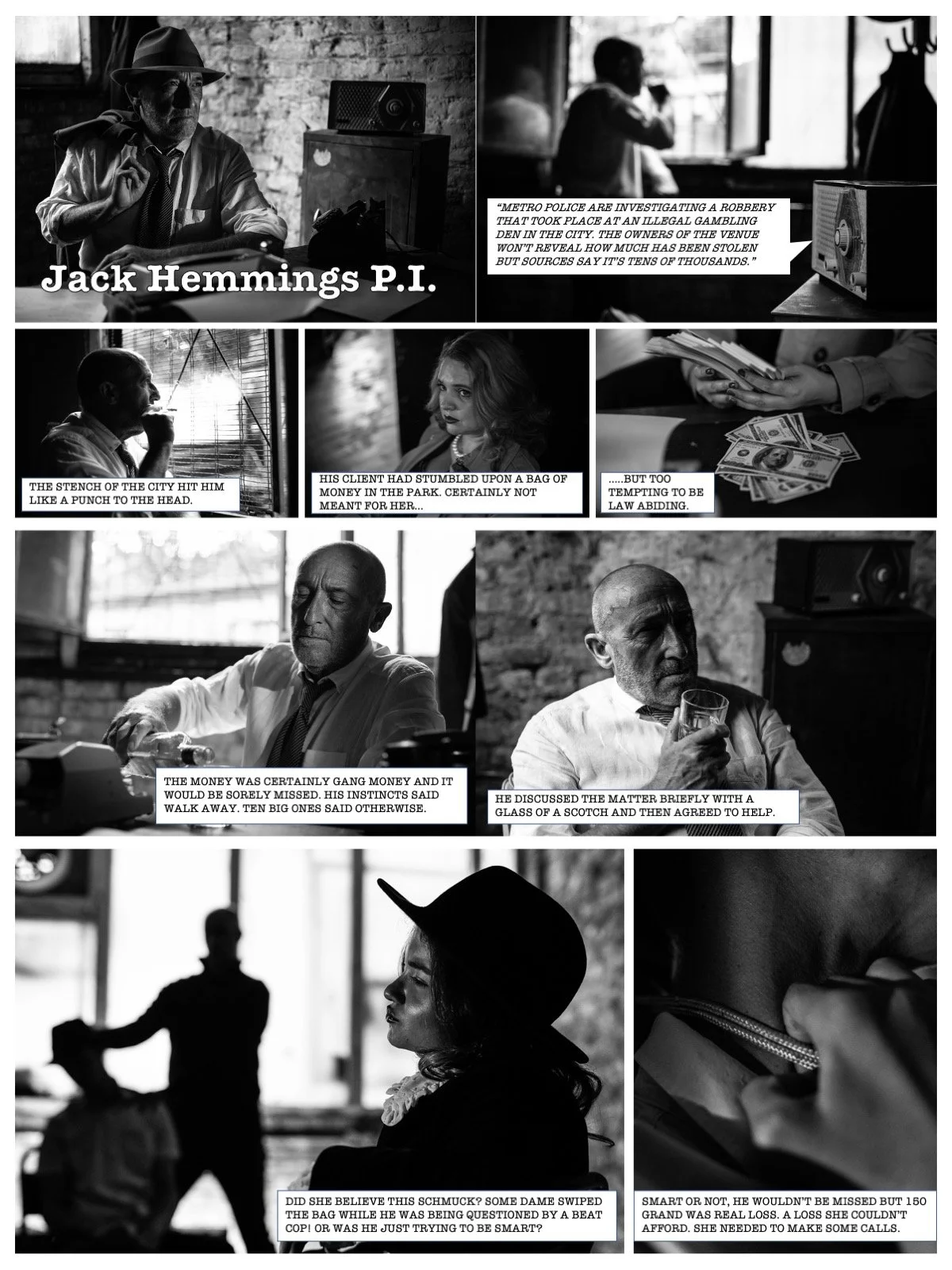
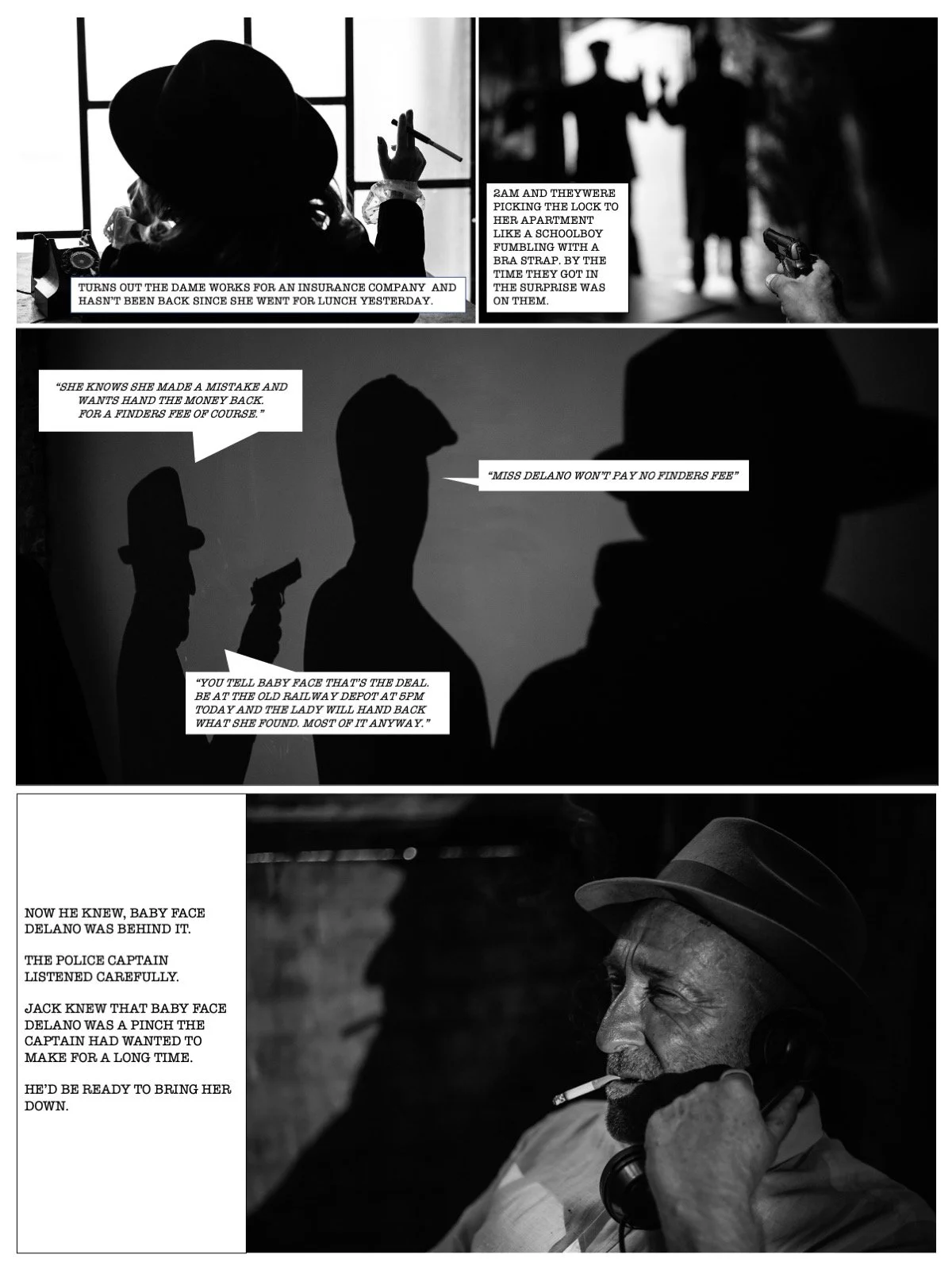
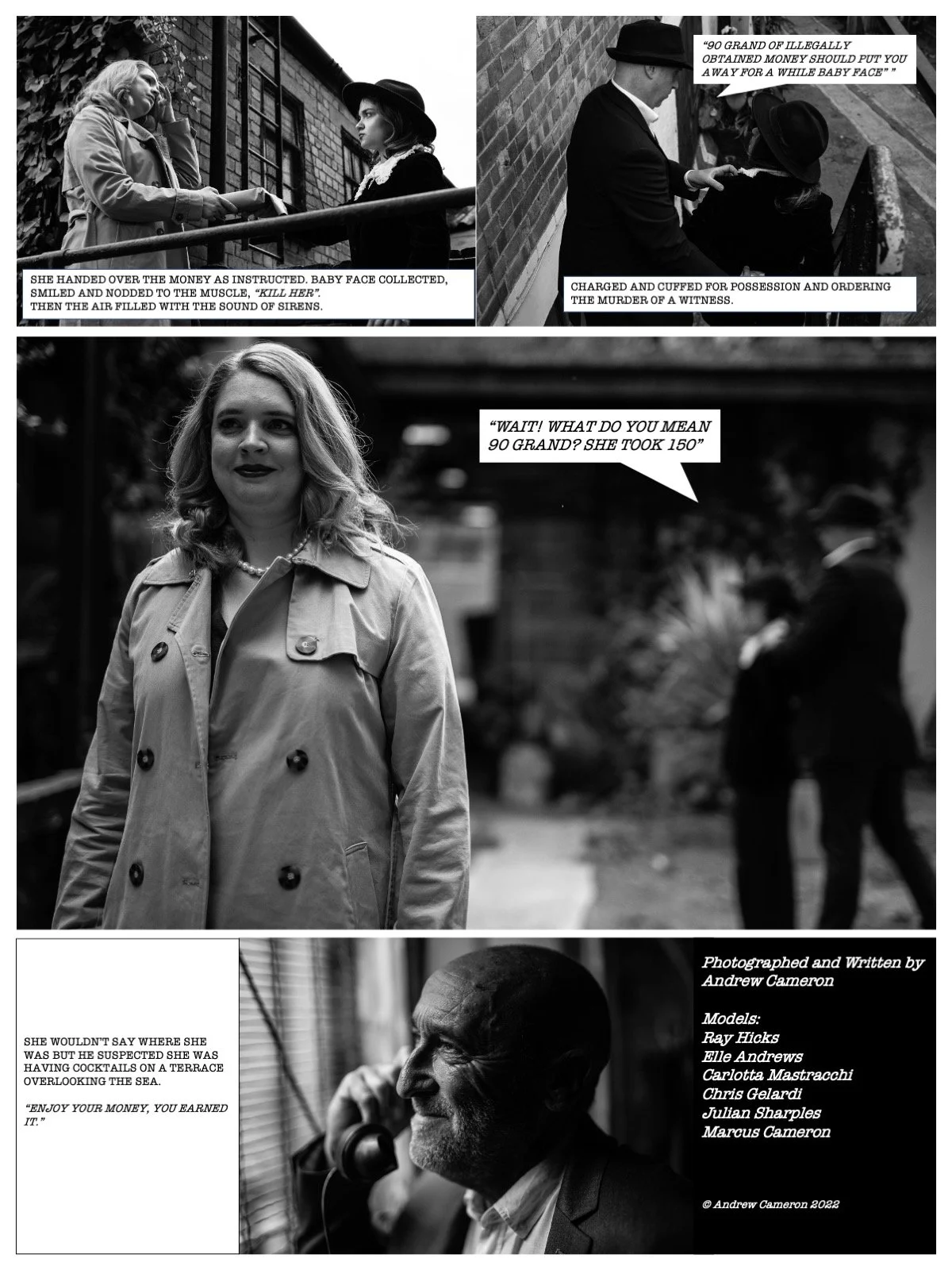
Like many people who studied drama and media I’ve always wanted to make a feature film. Lots of things have got in the way, many of them just excuses but I did strike upon the idea of creating a series of stills that could be put together as a visual narrative supported by - a bit like a cartoon strip.
One day I sat down and wrote a script that I could shoot in about 12 photographs.
It was called The Take Down and I decided to shoot it all in film noir style at a location in east London that I knew of.
I used a casting platform to find some great models and we all met up at a warehouse studio for a fun day.
What is Film Noir
Film Noir describes a genre or style of movies that enjoyed their heyday during from the 1940s and 1950s. They were often suspense films that required the directors to convey tension and drama which was achieved through the characteristics of film noir.
Film Noir is characterised by its use of shapes, shadows, chiaroscuro lighting and for being (mainly) black and white.
Although Film Noir is famous for the American films produced in the 1940s and 50s, such as The Killing, North by Northwest, The Maltese Falcon and others, the visual style was influenced by earlier French and German films. And also photographers.
The early Film Noir photographers
Brassai was a Hungarian-French photographer who took to the streets of Paris at night during the early 1930s. Brassai created wonderful images of shadowy figures against the harsh street lighting that brought shapes into sharp relief separating them from the backgrounds they usually blended into during the day.
Weegee, whose real name was Arthur Fellig became a freelance photographer and photojournalist in 1935. By 1938 he had developed a relationship with New York Police Headquarters who allowed him to install a police radio in his car. This meant that Weegee was often first to the scene of a crime and could therefore take photos before the police arrived. He focused mainly on murders, many of which took place at night, and he developed a style, described in The New Yorker magazine, as including 'angles and shadow play'.
Film Noir Photography and Storytelling
I’m drawn to film noir style photography because it is a test of my ability to tell visual stories in a specific genre and therefore, it’s a great way to practice your storytelling skills, as well as exploring how to light a scene and control the camera settings to achieve the desired shot.
Creating Film Noir style photographs is about understanding and controlling light, placing shapes within the frame, and the mise-en-scene.
Mise-en-scene is a phrase used in theatre and film to describe the placement of actors in relation to the elements of set design. For this reason the story itself and locations are important when thinking about film noir photography. When I think of traditional film noir movies the recurring visual themes include tunnels, ironwork, staircases, exposed brick, in fact, what today we might call an 'industrial' look and feel.
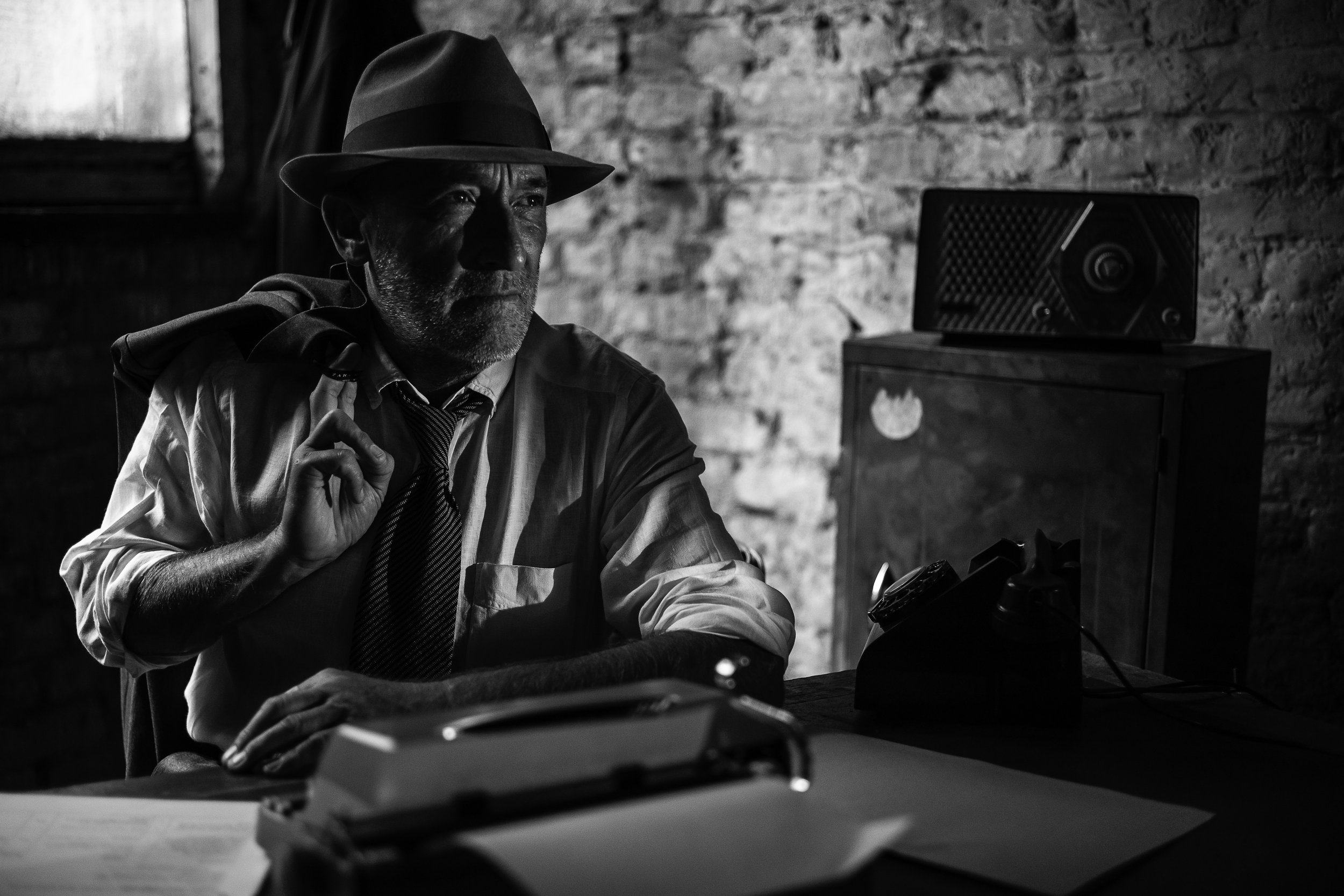
The image below is from a sequence shot in a warehouse studio. I could of course used a modern office but the story would be different if the walls were plain rather than brick.