An extraordinary person
I first met Dennis Matheson in April 2026. I had just finished a two year project photographing a young farming couple who were learning to farm on their own for the first time. After finishing the project I wanted to photograph farmers who were still active long past the age of retirement and I was soon introduced to Dennis, an 80 year old tenant farmer with a mixed farm of cattle, sheep and a small amount of arable, that he uses to feed his livestock through the winter.
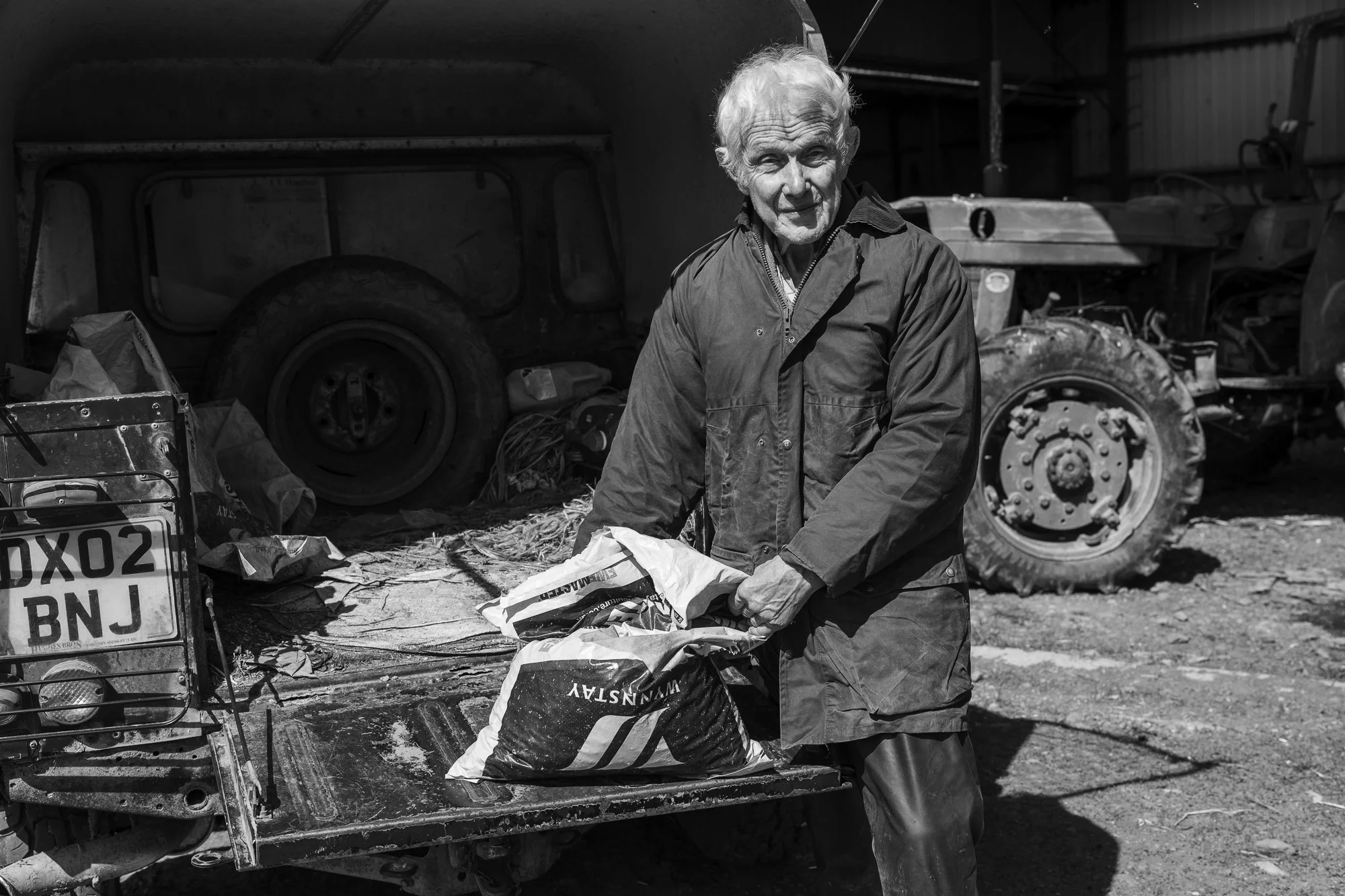
Dennis farms alone. He has no descendants and now has very little help, in part because his helpers over the years have all retired. He is a lifetime tenant of a farm once owned by his stepfather, which is part of a much larger estate on the English-Welsh border, just inside Wales - although the terrain reminded me of the Scottish Highlands.
Dennis is one of seven farming tenants of the estate and his land is particularly hilly and rocky, with streams running through his fields and rivers dividing them. It's pretty but pretty unforgiving.
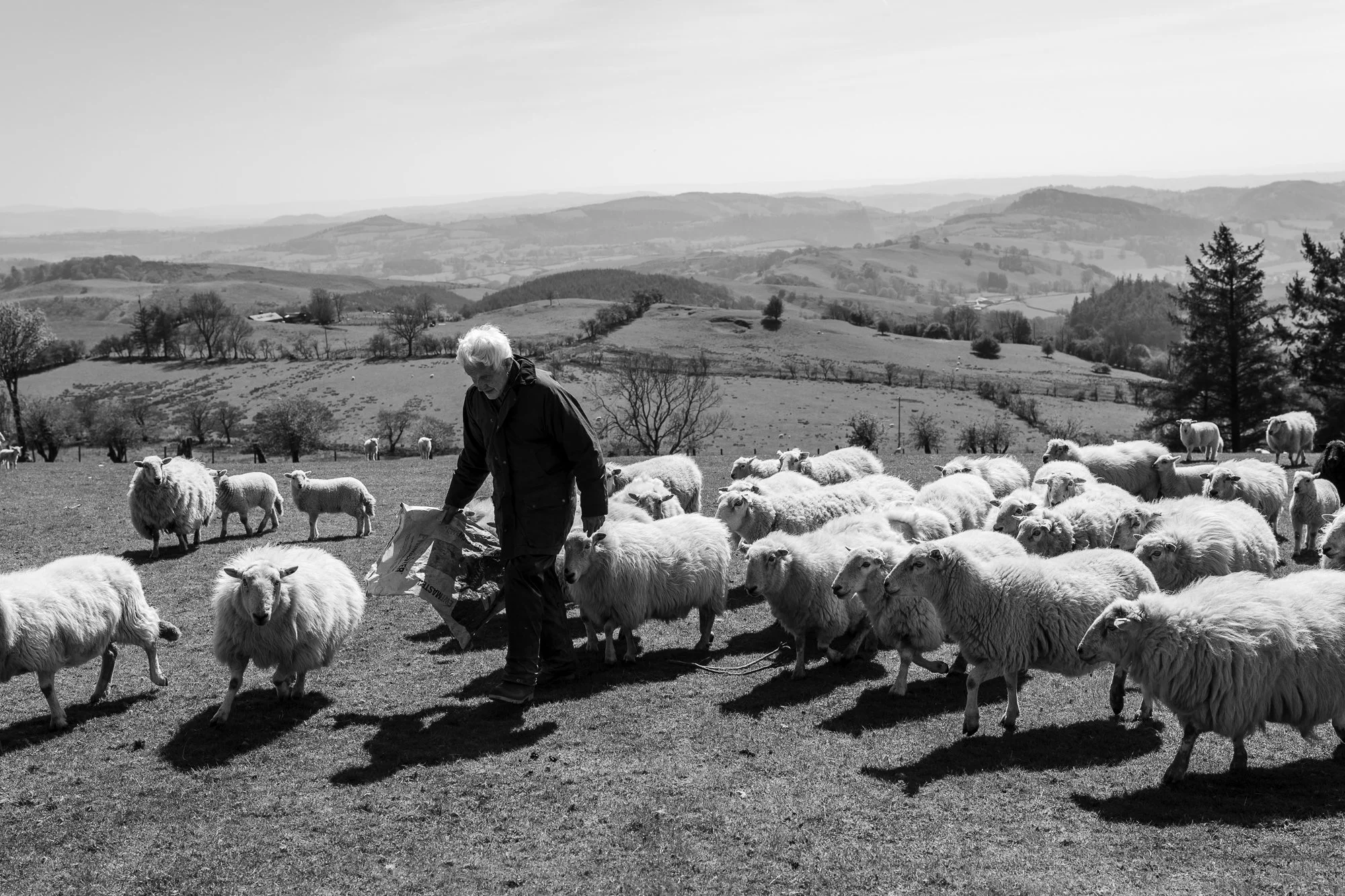
Dennis himself lives in a cottage that dates back to the 16th century which is accessed by a long stone track that would be almost as quick to walk along than drive. Yet, Dennis sets out from his cottage every morning in his trusty Land Rover, opening and closing gates, driving up steep hills and negotiating rocks, bogs and equally steep descents to check on the welfare of his animals.
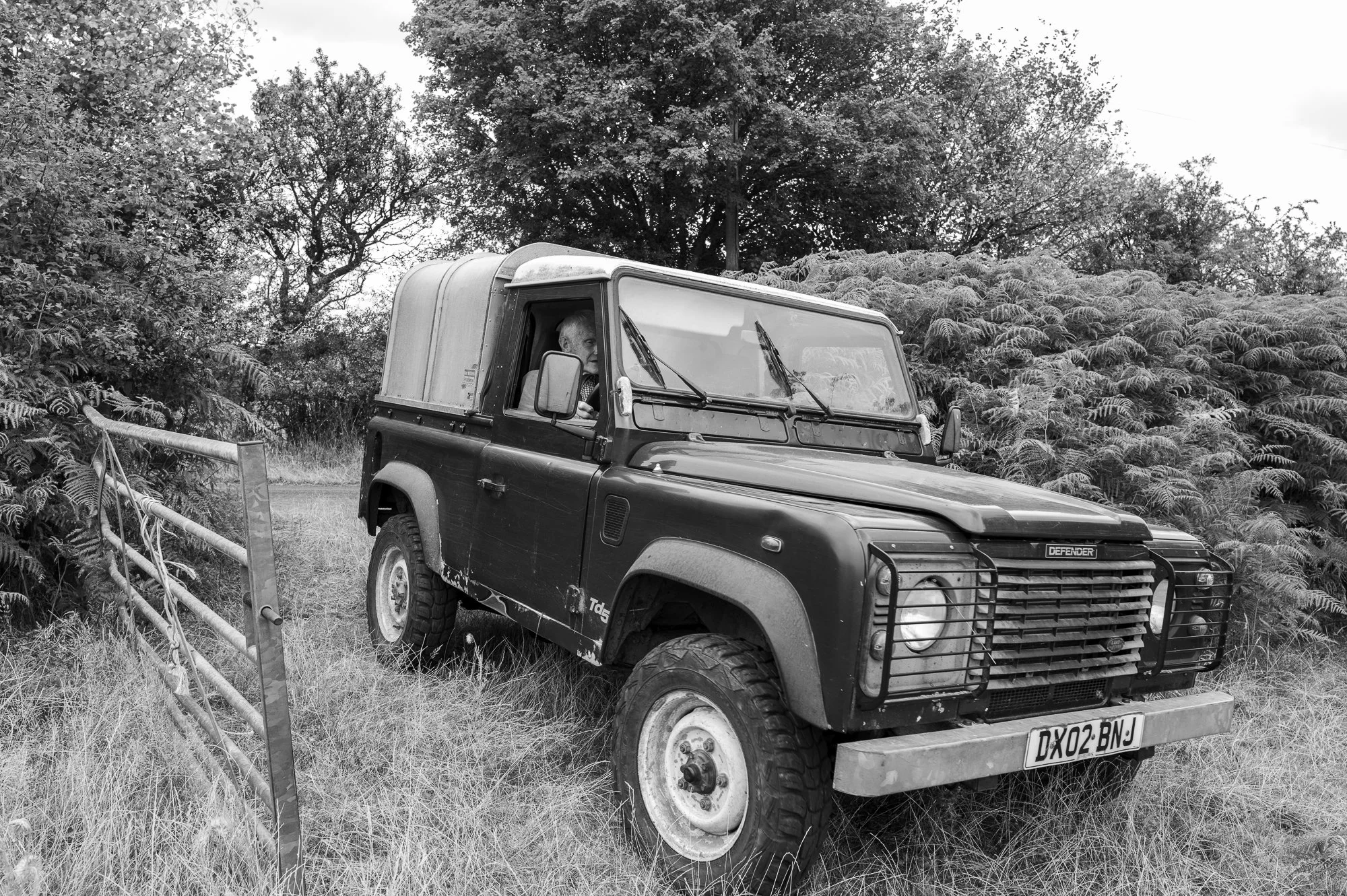
In August 2026 I spent 24hrs with Dennis, we met on a Monday lunchtime and I was by his side until early Tuesday afternoon, observing and documenting life on a Welsh farm for an 80 year old tenant farmer.
"I farm because it's fun. When it stops being fun, then when I'll give it up." Dennis told me.
Dennis is a well travelled man, he’s farmed in Australia, Ireland and several places in England before ending up in Wales in the 1980s. That he's passionate about farming is a given but he's extremely concerned by food security and the apparent blasé attitude of governments towards the farming sector.
"I don't think they realise how precarious things are." He quotes irrational policy decisions, the weather, rising costs and increasing administration as the contributing factors that are leading to the declining numbers of farms in the UK.
When it comes to farming he’s seen it all and nothing phases him. Shortly after I had arrived at the farm I heard the sound of a quad bike from one of the lanes and Dennis emerged, all smiles despite a failed attempt to round-up a group of cattle that had broken through into a neighbours field. Over the next 24 hours I was to learn the necessity and futility of fencing this terrain.
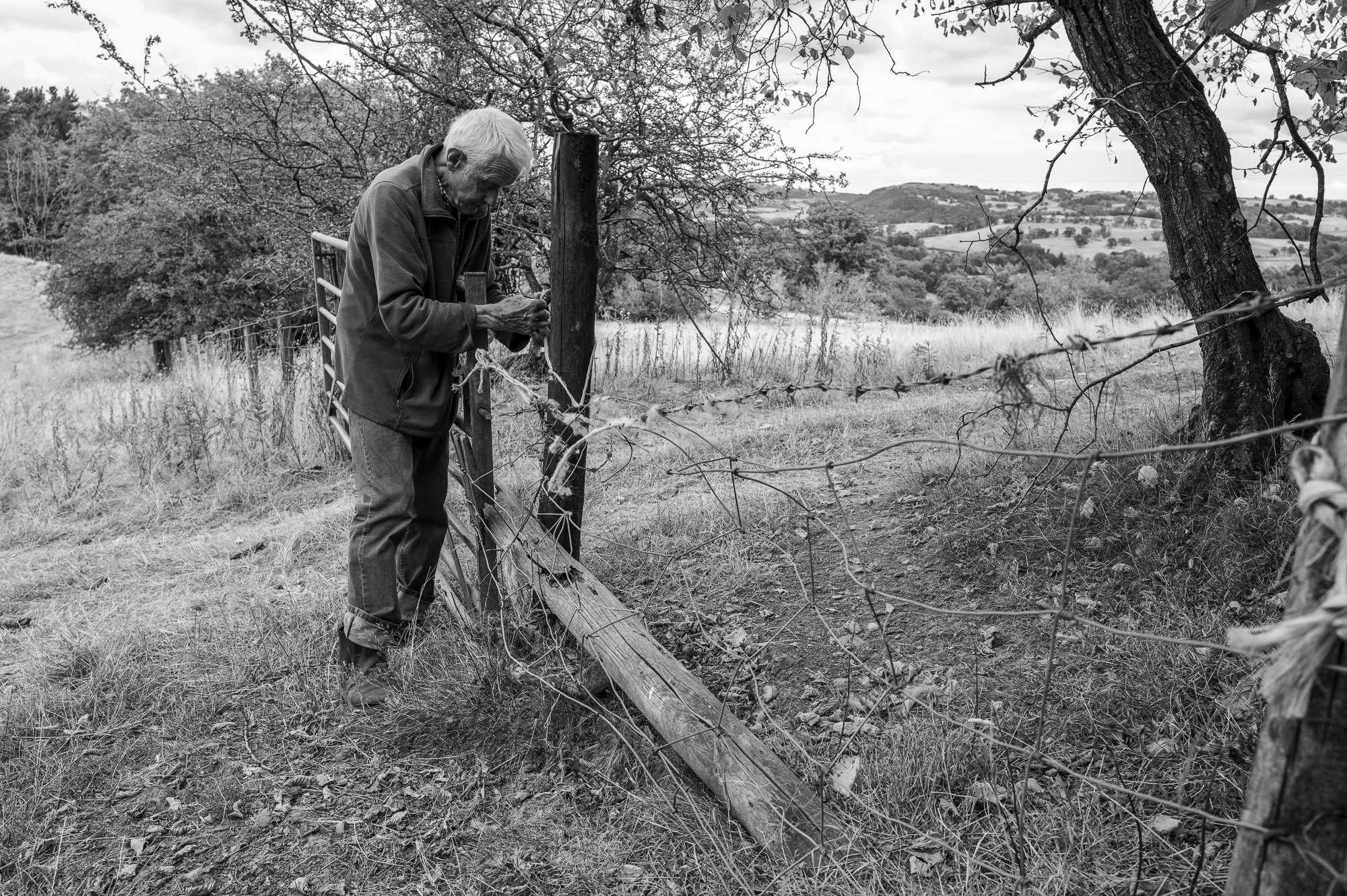
Perhaps when we think of farms, we imagine fields that are rectangular or squarish, fairly flat with some kind of fencing around it. Now imagine a field with 30+ degree incline, a stream running through the middle, rocks, trees, bracken and a shape that doesn't have a name because it's so odd. That's what many of Dennis's fields are like and trying to fence them securely is like painting the Severn Bridge - it's an on-going job that never ends.
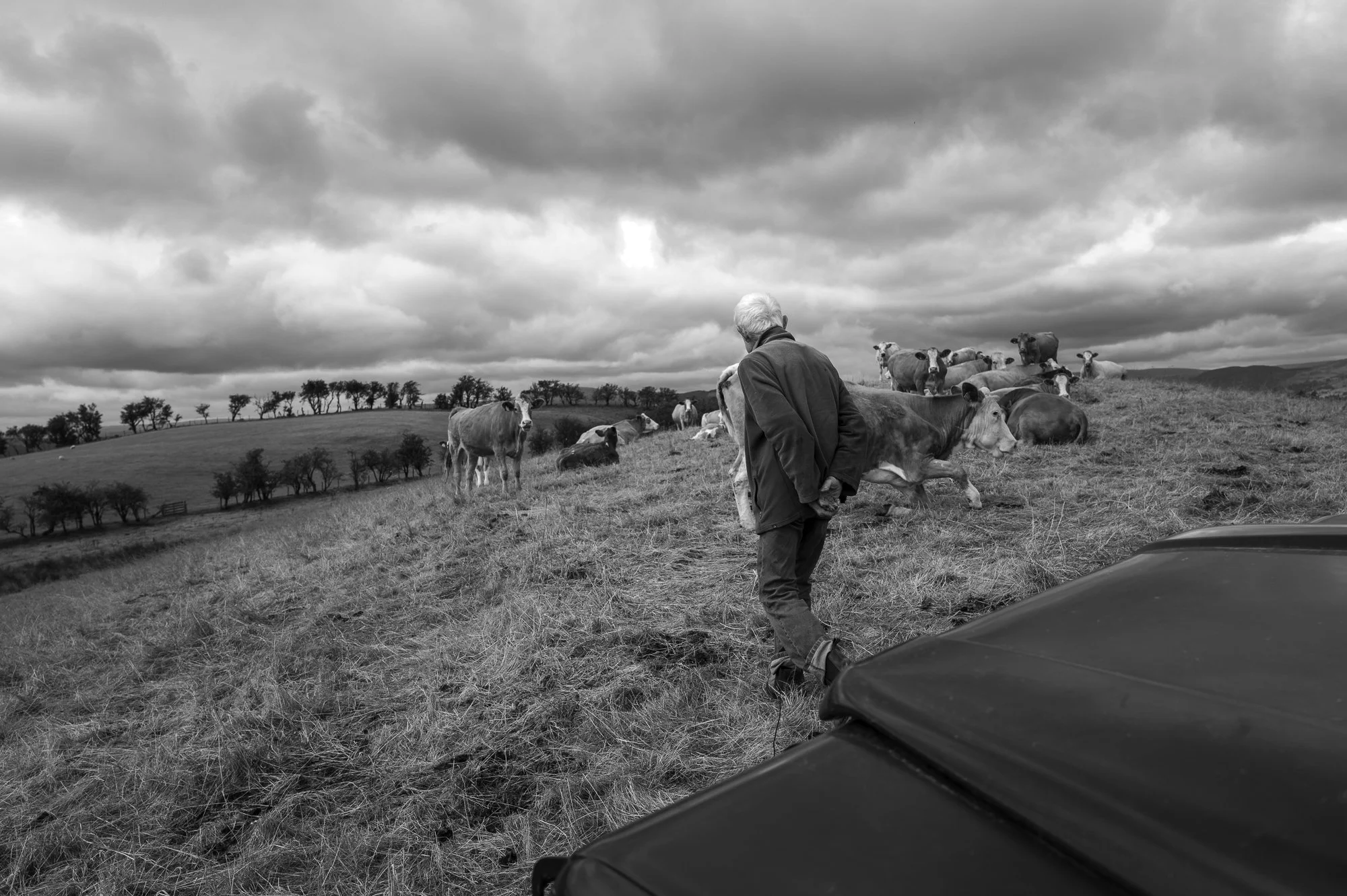
Of course, in August 2026 we were experiencing the hottest year on record and for Dennis the priority was to ensure that his livestock had a supply of fresh water, all of which was pumped from underground wells and the river. Checking the pumps and the troughs was now a regular job. "All the streams have dried up, I've never seen it like that."
When checking one field and discovering a calf was missing we set off to find it. The field was steep - like a dingle - and usually had a stream running through which was now dry. We searched the the undergrowth along the stream thinking the calf may have fallen in but we couldn't see anything. We then checked around the perimeter and found the calf had got itself stuck in a bog - yes, an underwater spring was keeping a small area wet and the calf had gone in search of water. It had fallen over and trapped its head in the roots of a tree.
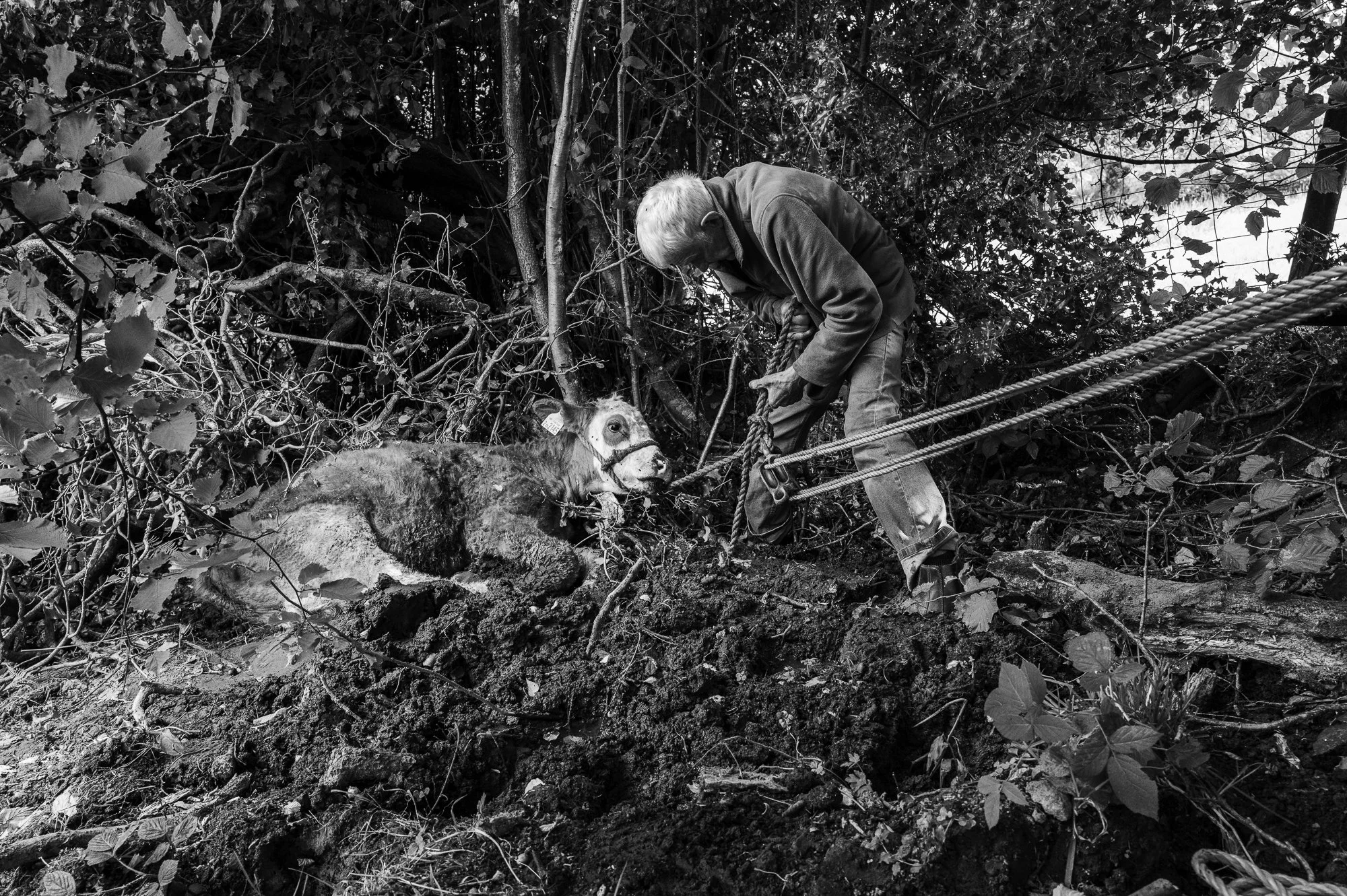
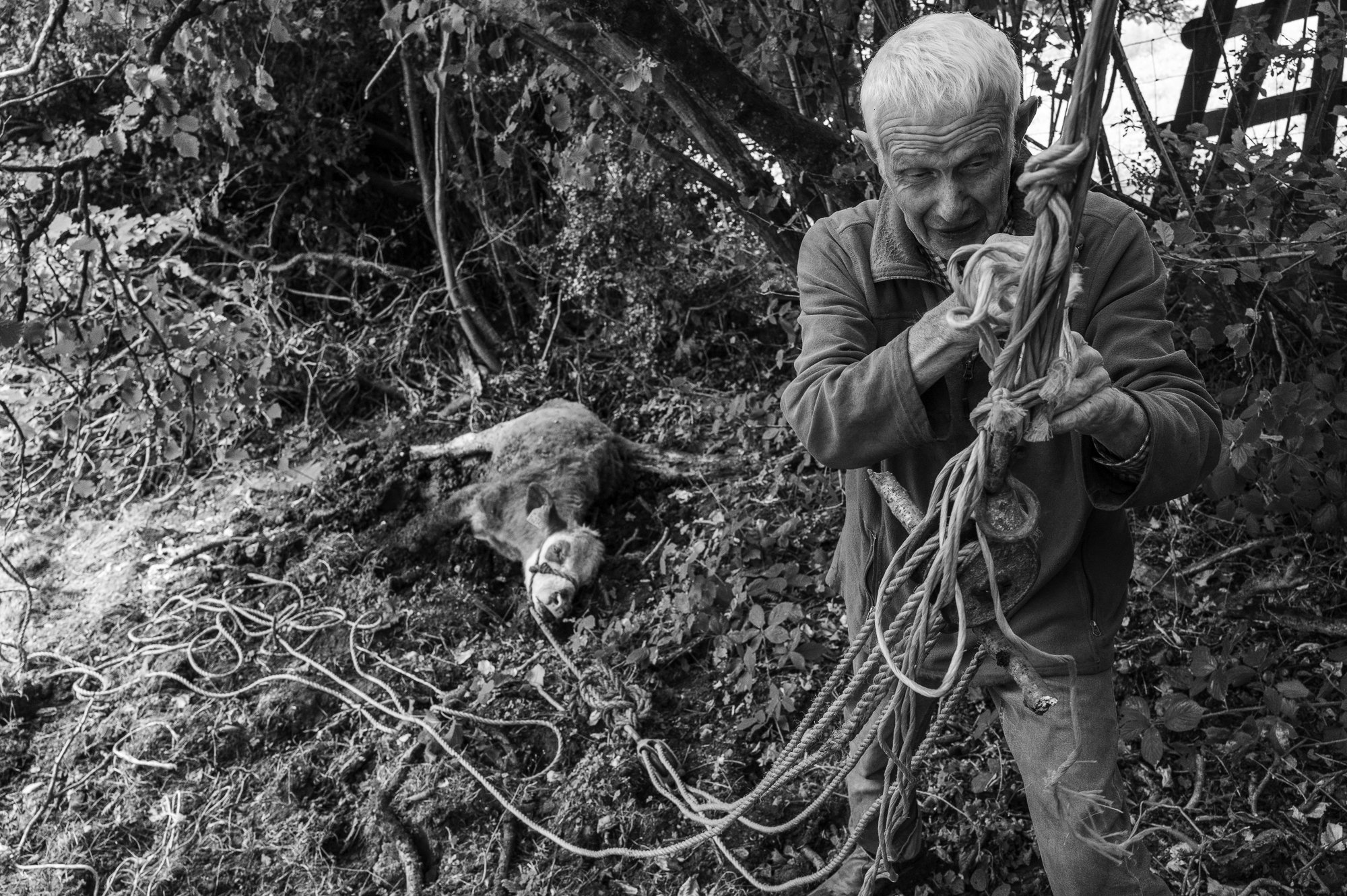
Dennis went in search of pulleys and rope whilst I freed the calf's head. He returned and promptly got to work with the rope, attaching one end to a tree and the other to the calf, and then we pulled. It took both of us to pull the calf free of the boggy area and put it into the sitting position to recover its strength.
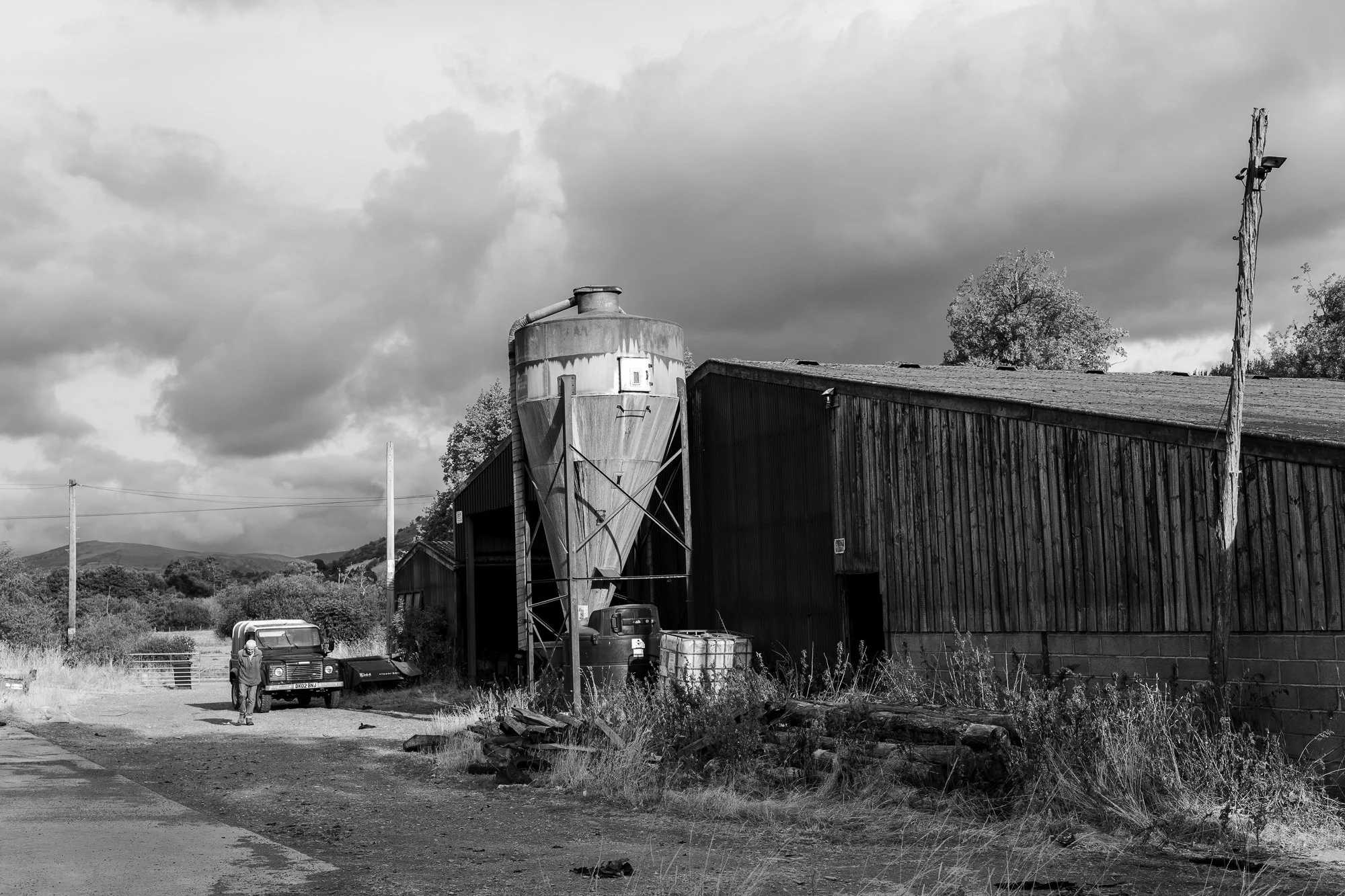
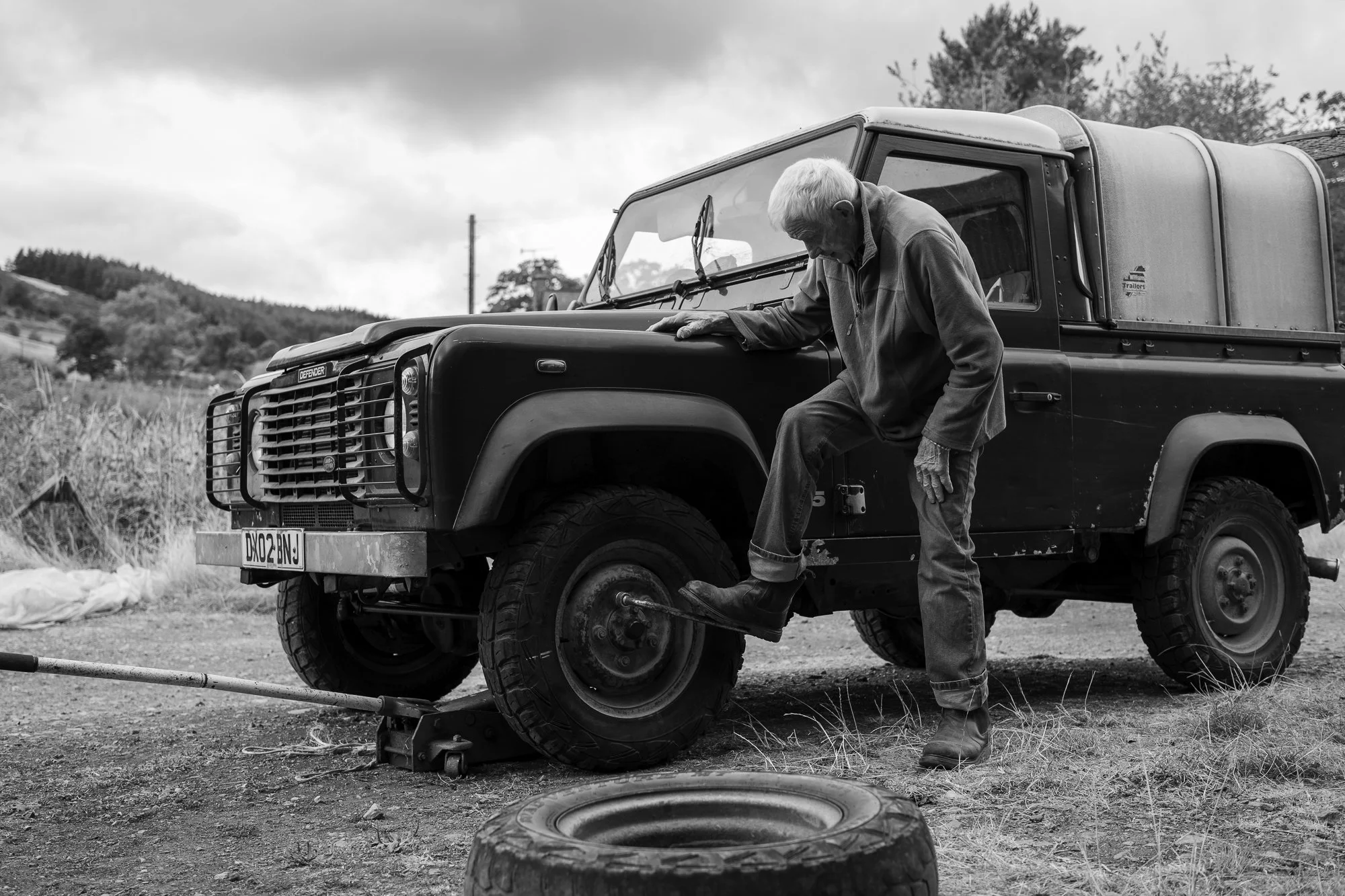
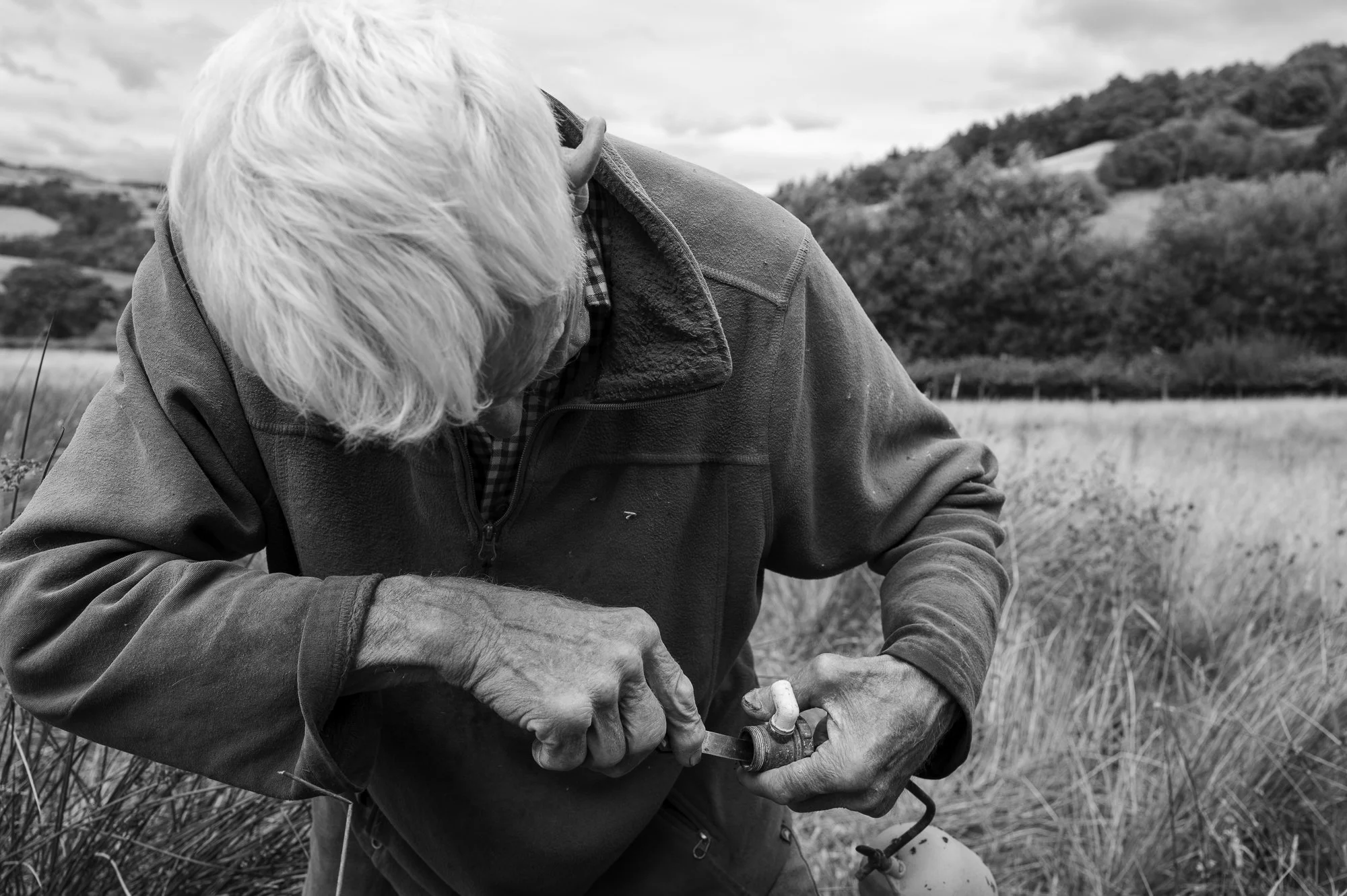
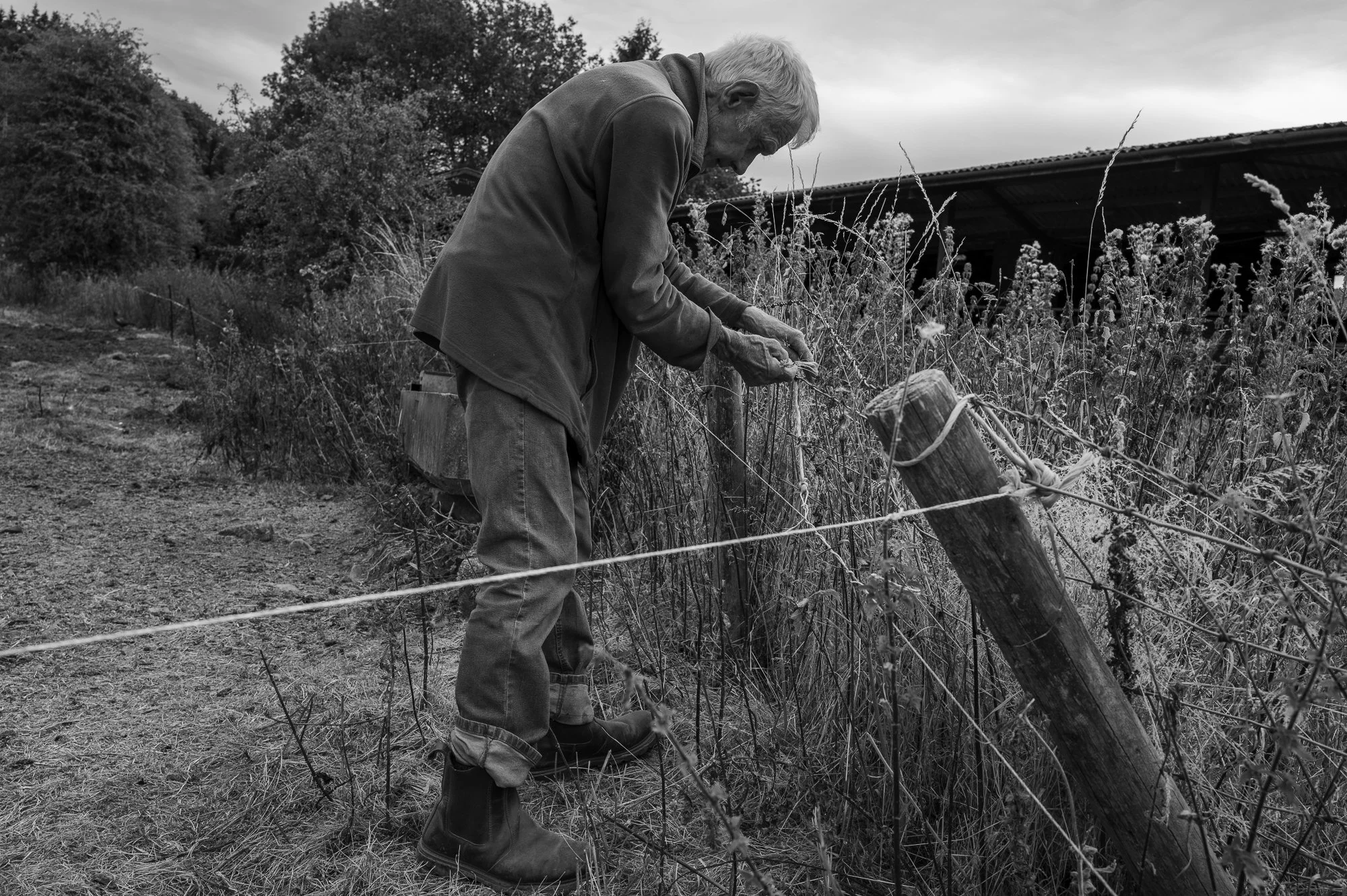
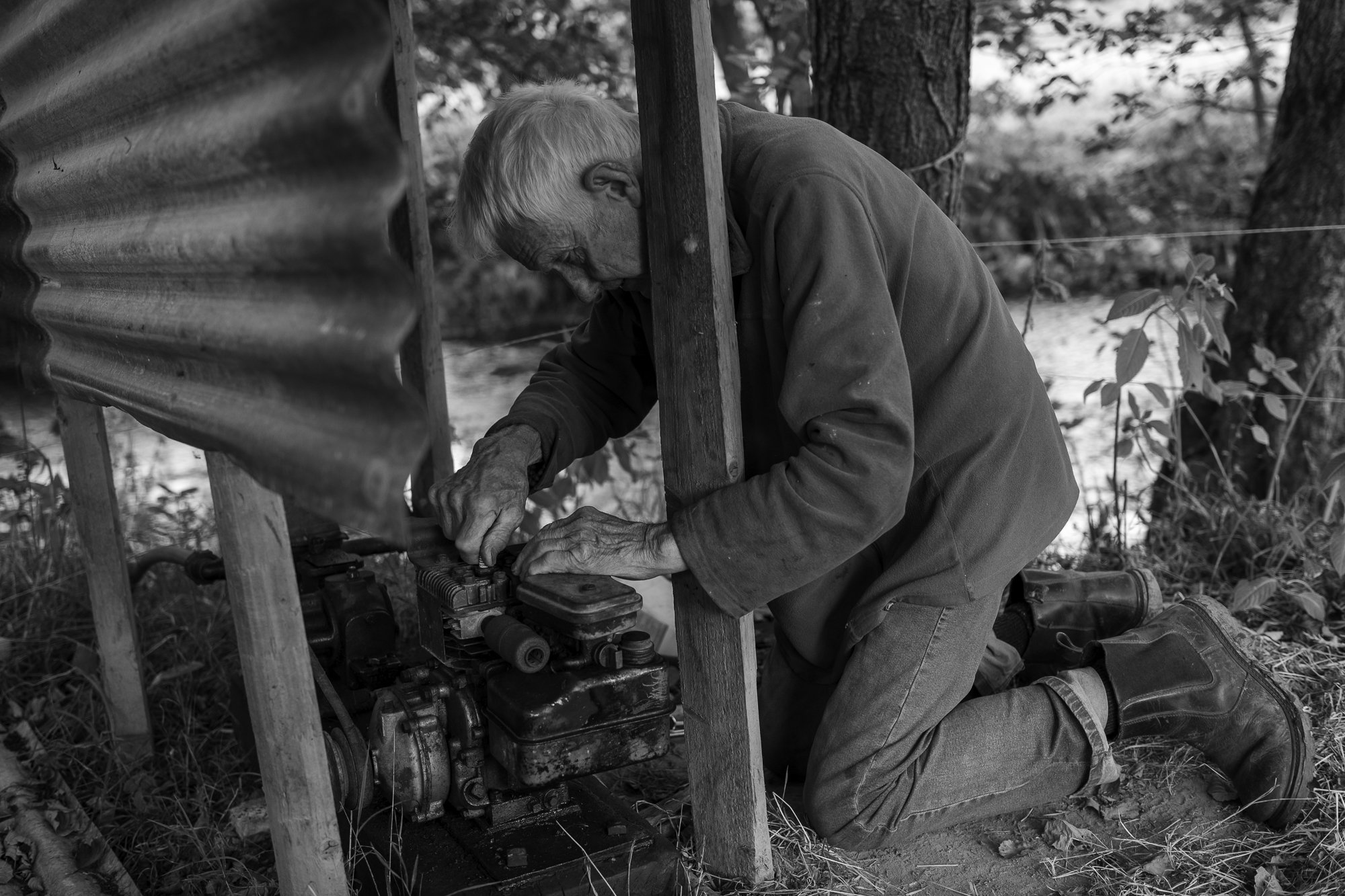
And so the challenges continued. The tyre on the Land Rover needed changing, pumps needed priming, water pipes needed unblocking, fences needed to be checked, gates left open needed to be closed again. It was relentless.
Dennis never stopped from the moment we met until the moment I Ieft. There was always something to do and a list of jobs only ever got longer and more expensive. That’s farming - you set off with one intention but then get diverted by a crisis that you find along the way.
It takes an extraordinary person to want to do this kind of physical and unpredictable work at the age of 80, and Dennis doesn’t appear to be slowing down any time soon.