Oak and Spirit
When you visit a whisky distillery, the first thing that hits you is the smell: the sweet, warm aroma of malted barley steeping in hot water as its sugars are drawn out. It's a comforting scent, and somehow you just know it's completely natural.
Walk into a cooperage (where they build the casks) and the air is different again: a heady mix of alcohol and fresh wood shavings. Between those two smells lies much of what makes Scotch whisky what it is. I've been fortunate enough to photograph both, at The Edradour distillery in Perthshire and at the Speyside Cooperage just outside Stirling, and what stays with me is how much of this global industry still rests on skilled hands and good judgement.
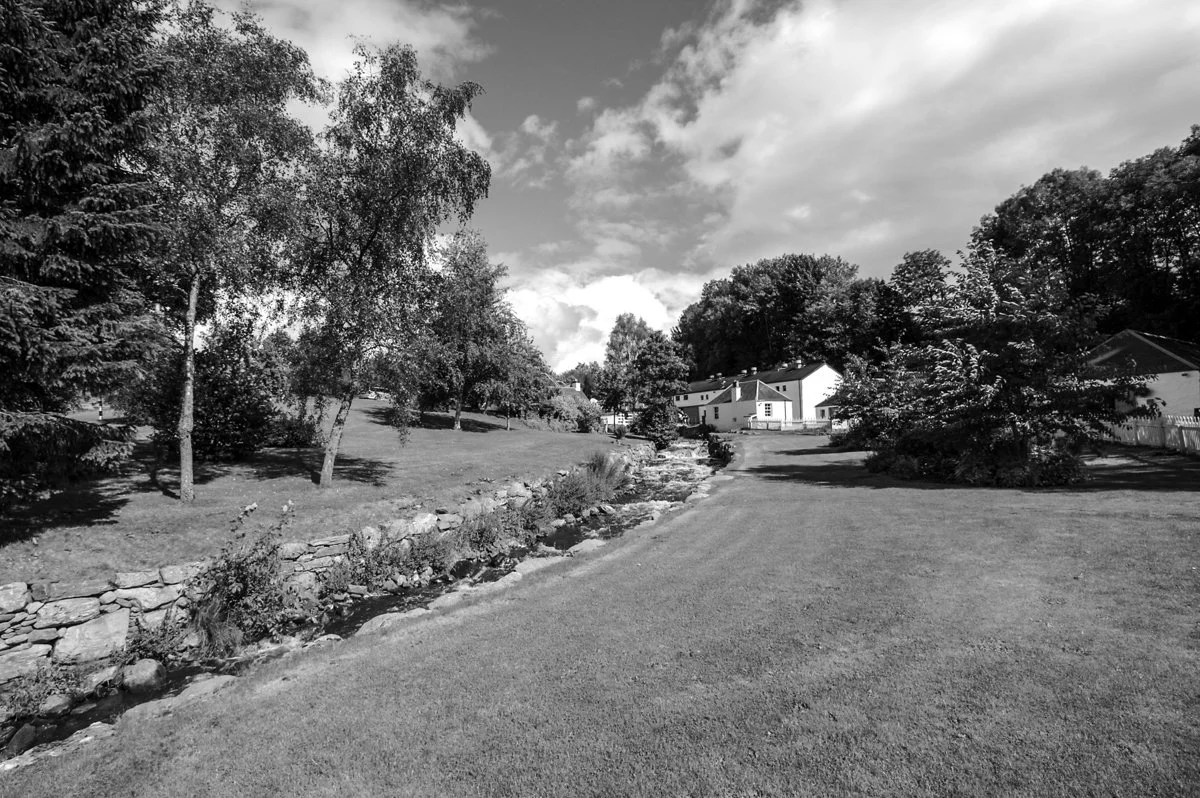
A distillery with a story
I first visited Edradour in 2002, shortly after Andrew Symington, the present owner, had taken over. I knew nothing of the distillery or its whisky beforehand, but the place has an irresistible charm that would make anyone smile. And, as I soon discovered, the whisky is pretty good too.
On my second visit, in 2005, I gazed at bottles of King's Ransom and House of Lords in the glass cabinets of the old malt barn while the guide talked about previous owners and rumoured connections with the American Mafia, the details long since lost to time. I was hooked, and the next time I was at the distillery was to discuss the production of a documentary for DVD, which was hugely successful and one of the clips can be viewed here.
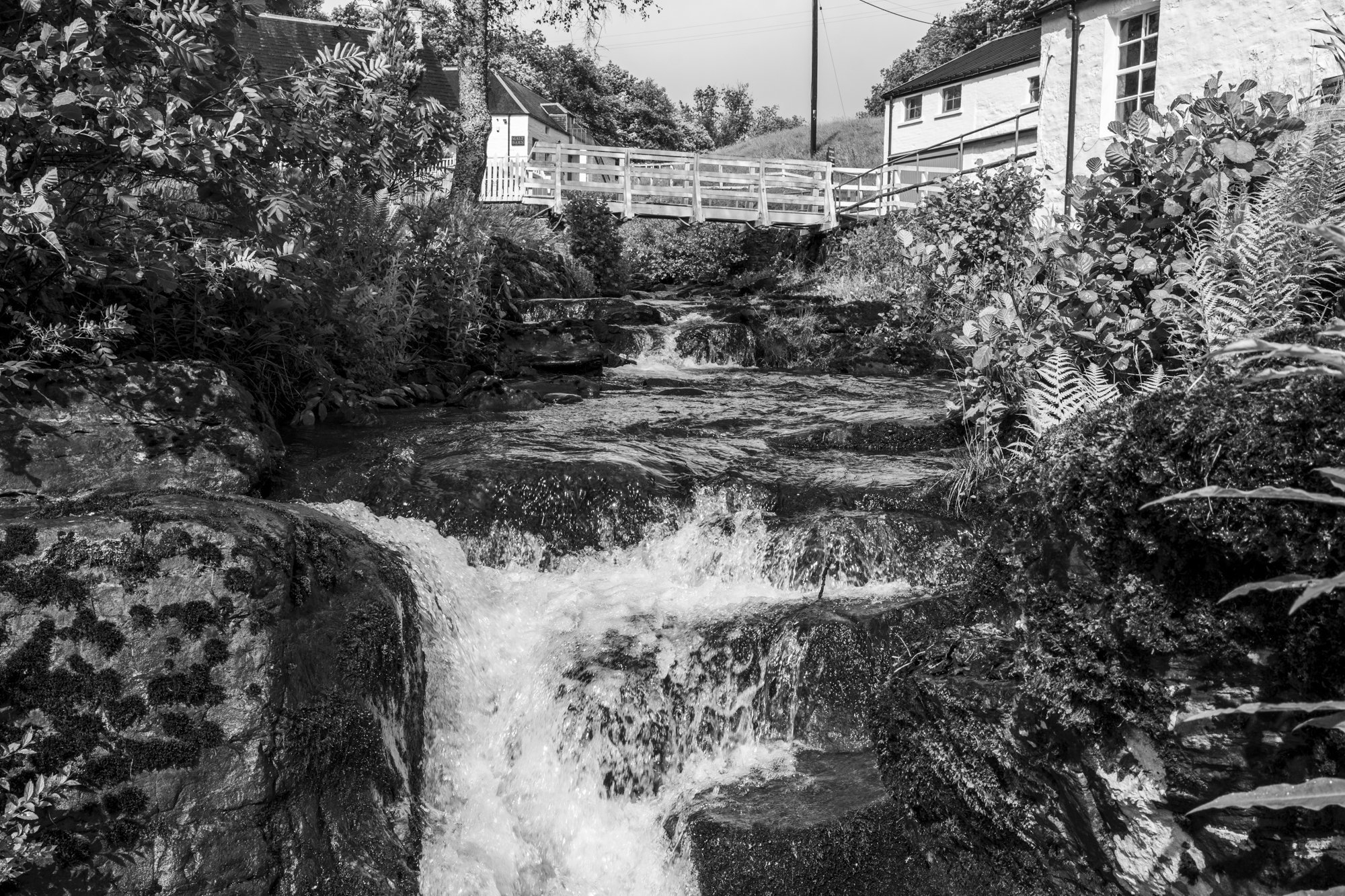
When you understand the history of the place it would seem that little has changed since local farmers walked down the hill into this small valley, leading Highland ponies laden with barley. They would have crossed the bridge over the Edradour burn, swapping stories in Gaelic about outwitting the hated Excise Officers, while buckets of crystal-clear water were hauled from the burn as it hurried on towards the Tay. Today the whisky is still made with water from the burn and local farmers play a role in the production process, although these days they arrive on tractor.
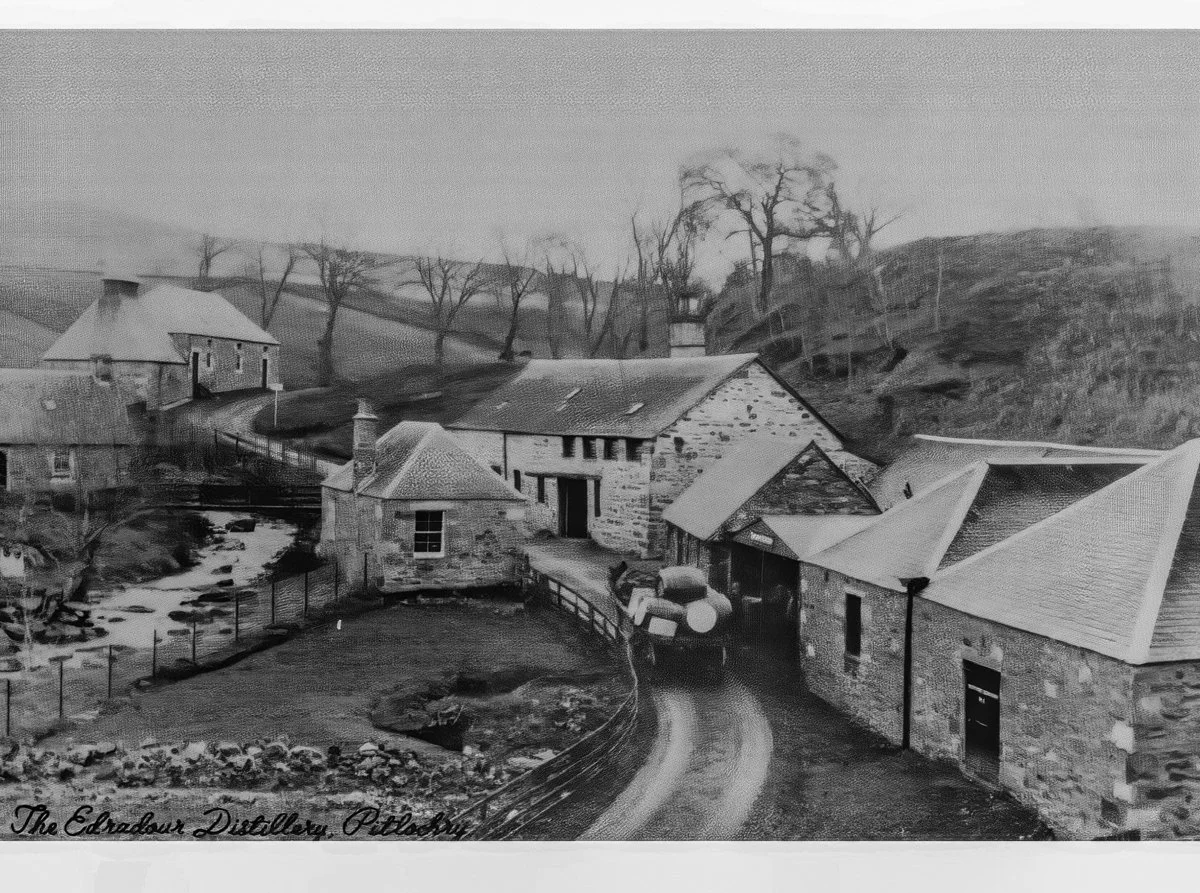
Making the spirit
Making whisky requires just five key ingredients:
• Barley
• Water
• Yeast
• A good quality cask
• Patience
The barley is no longer malted at Edradour. Floor malting once demanded huge spaces so like the majority of distilleries, Edradour now receives its malt prepared to its own specification from the finest Scottish barley. The old malt barn rests on the slope above the burn, watching young Andrew Symington Jr deliver one-tonne sacks of malt to the upper floor, ready for milling.
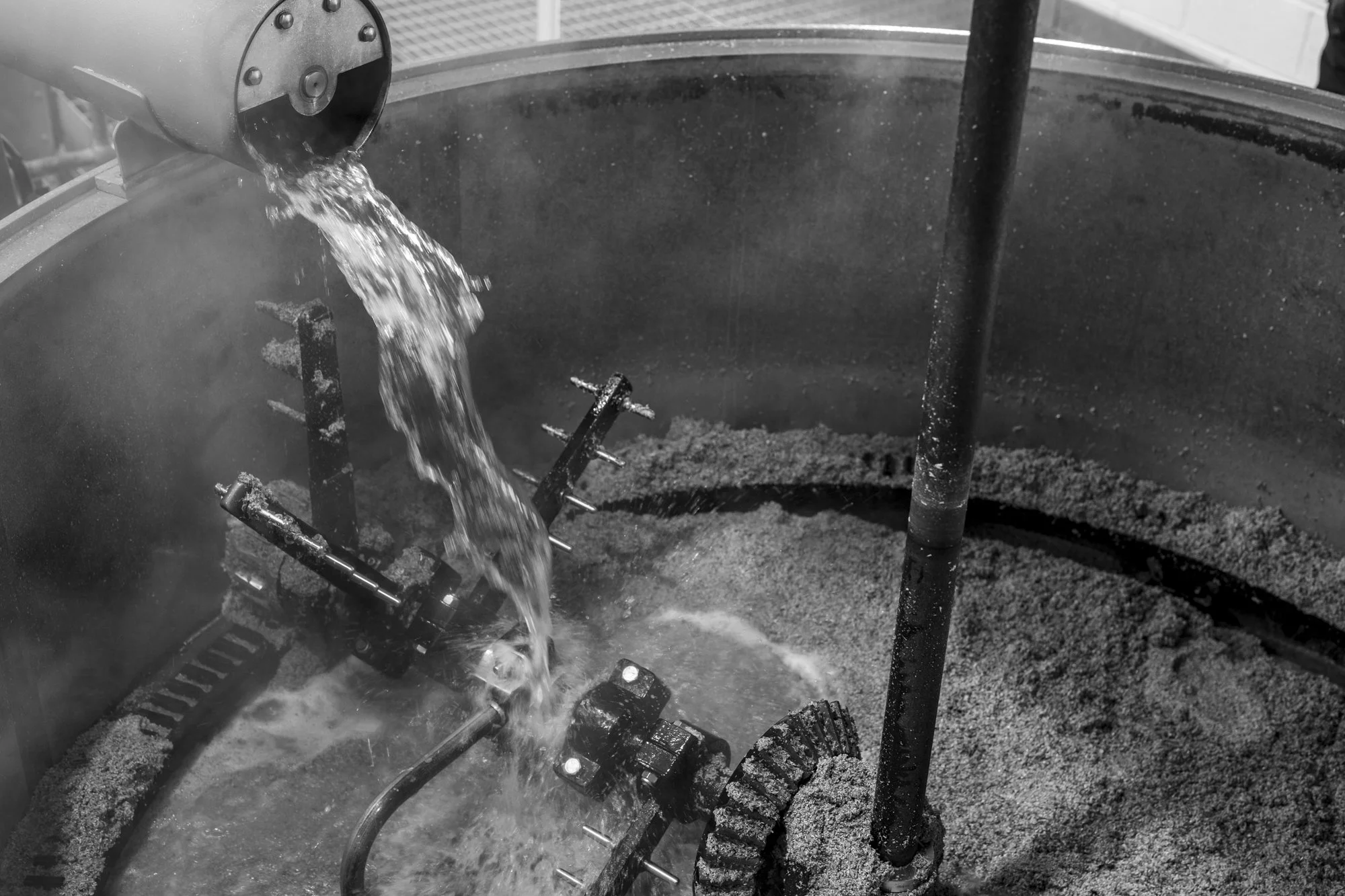
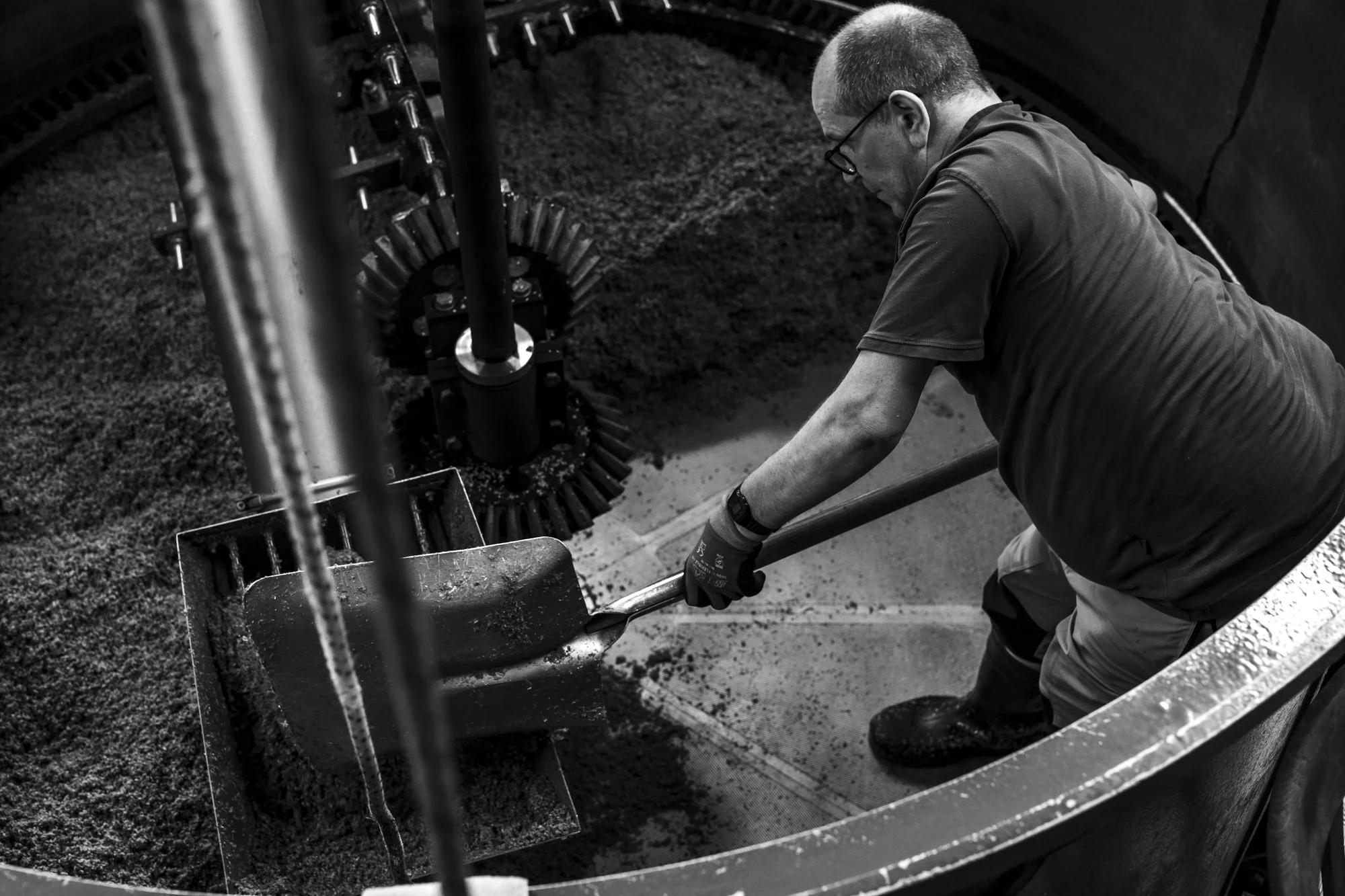
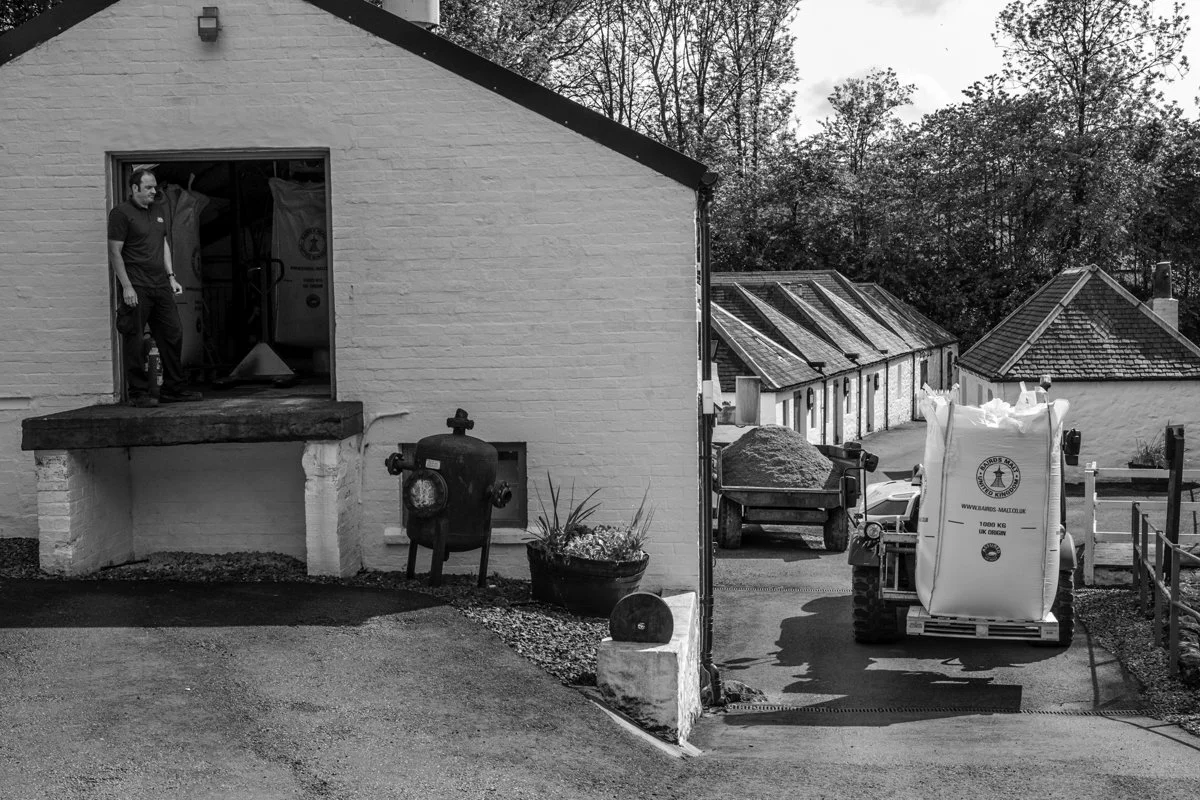
The day starts early. The stillmen fire up the water boiler, and the lightly milled grist is poured into the wooden mash tun and mixed with water drawn from the burn. Three waters go in over the course of the morning: the first at around 69°C, the second at 89°C and the third as hot as possible, which is kept to become the next day's first water. The sweet liquid from the first two, known as wort, is cooled and run into a wooden washback.
Until recently, Edradour cooled its wort with the oldest system in the industry, a Morton Refrigerator thought to have been designed for cooling milk on dairy farms. When it finally needed replacing, Andrew Symington had an exact replica made rather than buy something off the shelf. Nothing is wasted either: the spent grist, or draff, is collected each morning by a local farmer for his best cattle.
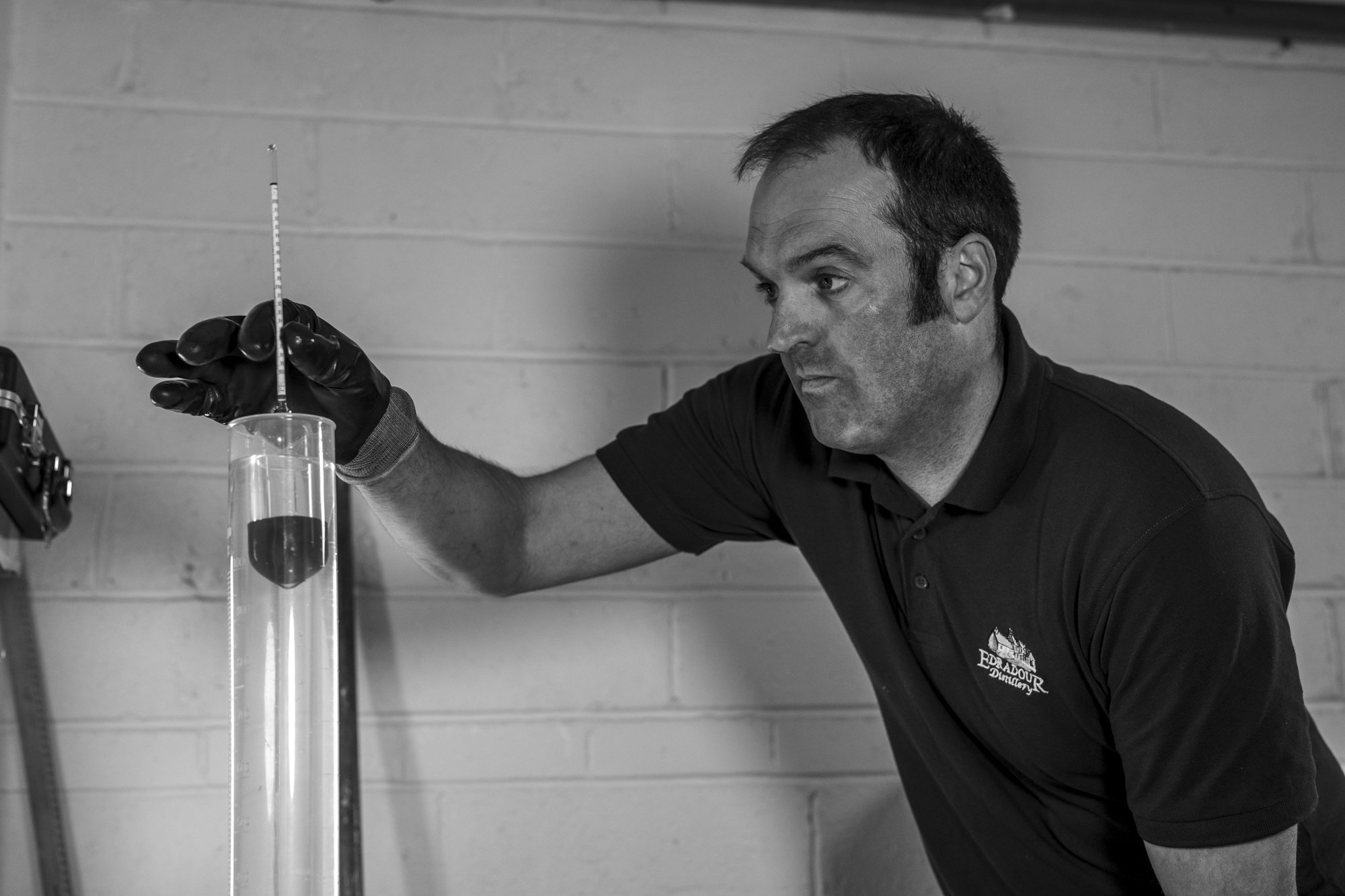
In the washback, yeast is added and the wort ferments, sometimes frothing so violently you fear it might breach the vessel. The resulting wash, akin to beer at around 7–9% alcohol, is distilled twice in copper stills. In the spirit still, the ‘run’ is collected in three parts: the volatile foreshots, the ‘heart of the run’ that will become whisky, and the feints, which are distilled again with the next batch. When to make those cuts is a matter of experience and what you want the whisky to taste like.
"It's about using your senses," one of the stillman tells me. "It's what you can see and smell that matters, and you learn that over the years. You learn how long things will take, and quite often you know before a buzzer or blinker tells you."
The cask
The fourth ingredient, the cask, is where my two worlds meet. Maturing spirit in wood became standard partly by accident. During the First World War, a law intended to curb drinking stopped spirit being sold until it had spent three years in a cask. Distillers discovered that the wait made it taste better and less fiery, and the cooperage became central to the industry.
A cooper is someone who makes and repairs casks. When the law was first introduced there was buoyant sherry market in England, whereby spirits were delivered to places like Bristol and blended here before bottling. This meant that most whisky was first matured in ex-sherry casks that were readily available in England. Unfortunately the sherry market dwindled and the last remnants of production were moved to Spain in the 1970s. Today, most Scotch Whisky is matured in ex-bourbon casks made from new American oak, shipped across the Atlantic in vast numbers once they have served their first purpose. Ex-sherry casks are still used along with port, wine and rum but in far smaller quantities. Whatever casks they are, they are broken down for shipping and so they arrive here in pieces and then go to a cooperage to be rebuilt, inspected, repaired and made ready for Scotch.
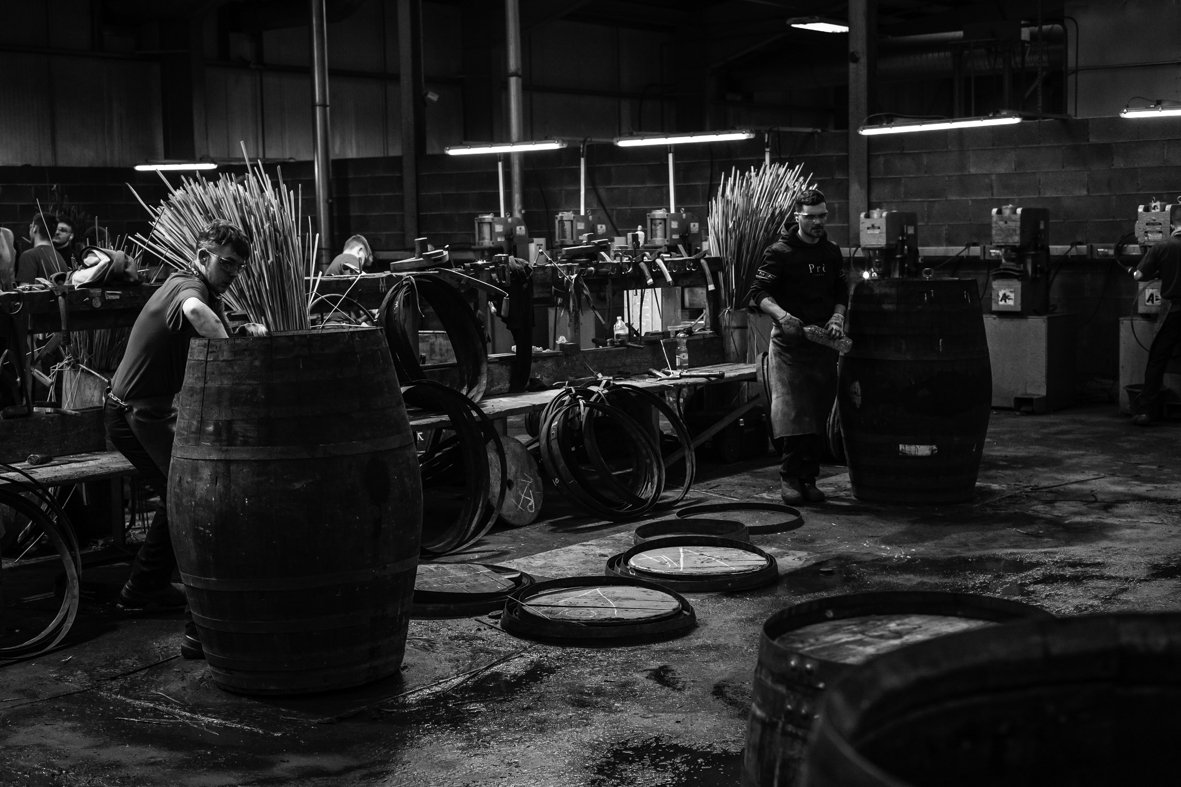
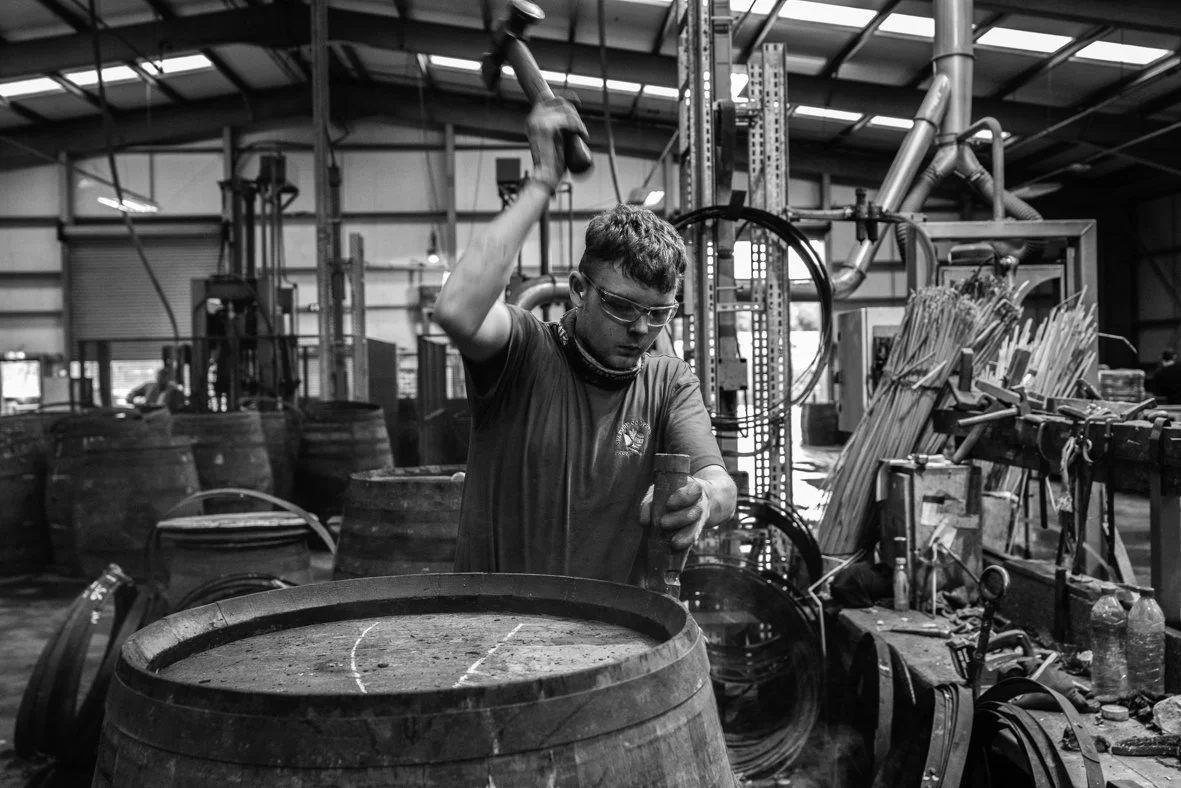
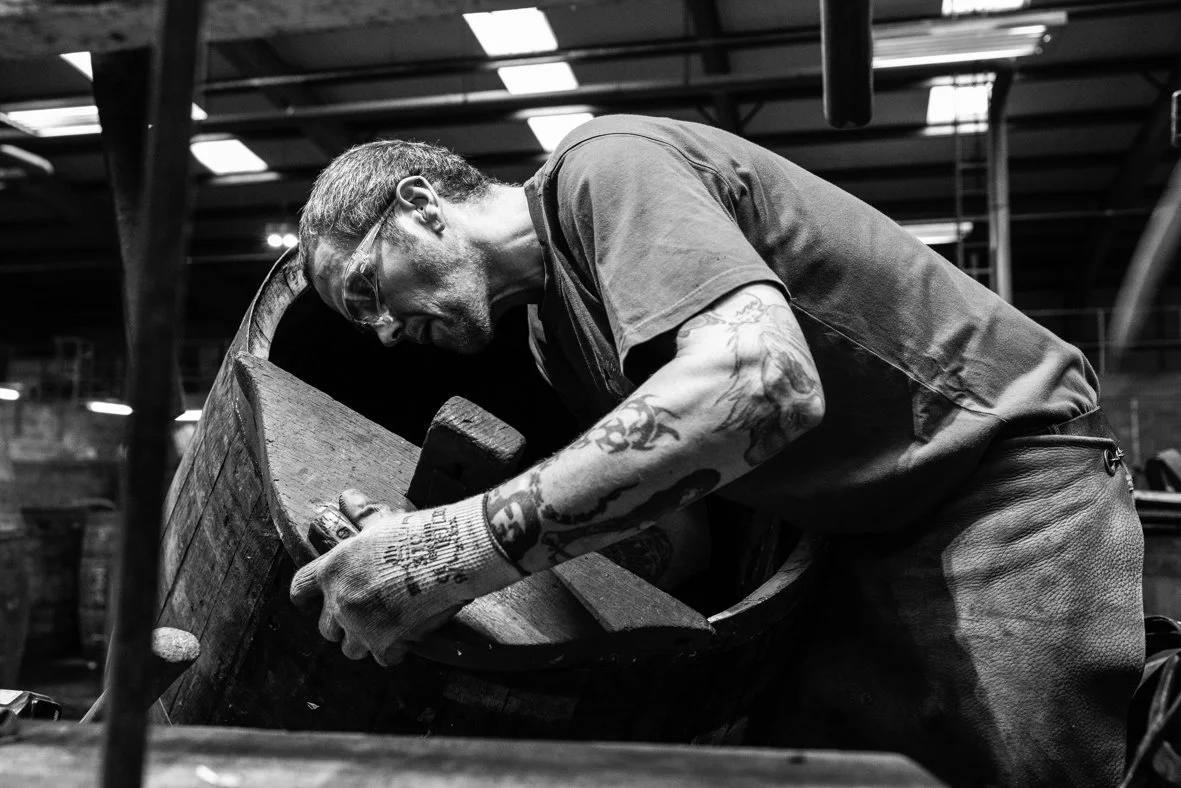
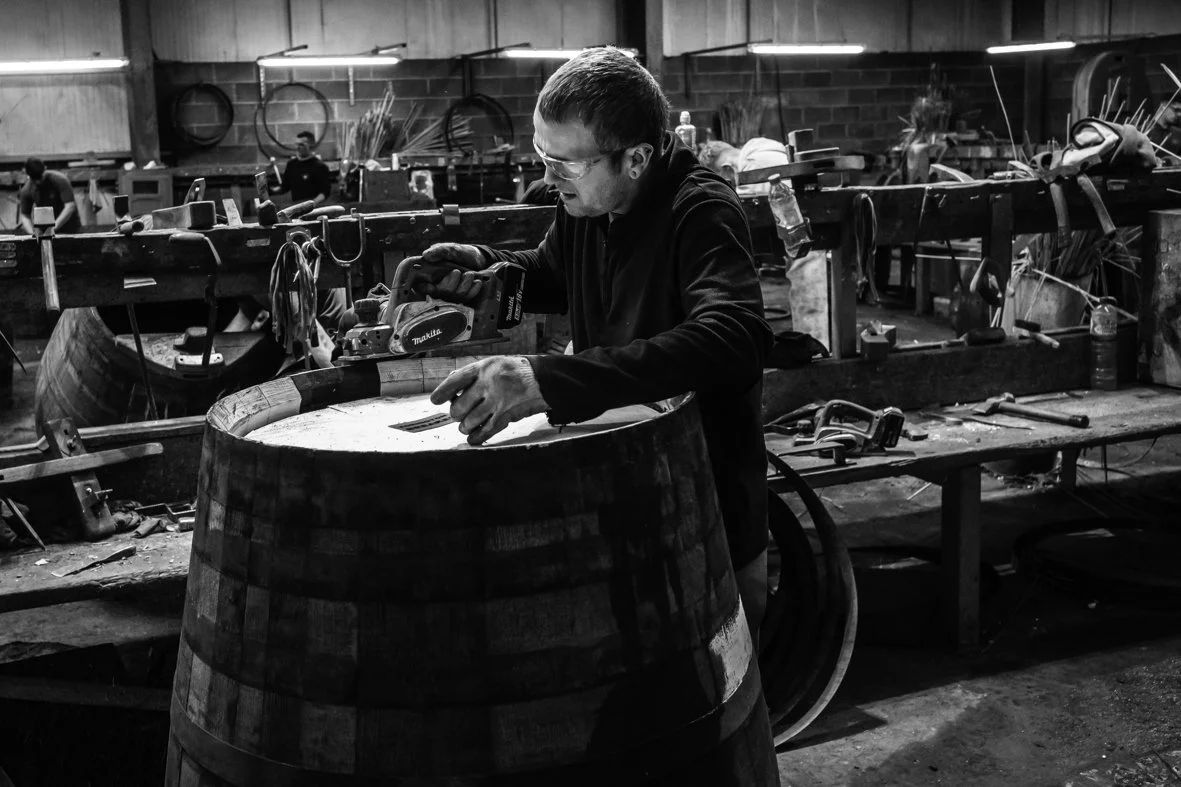
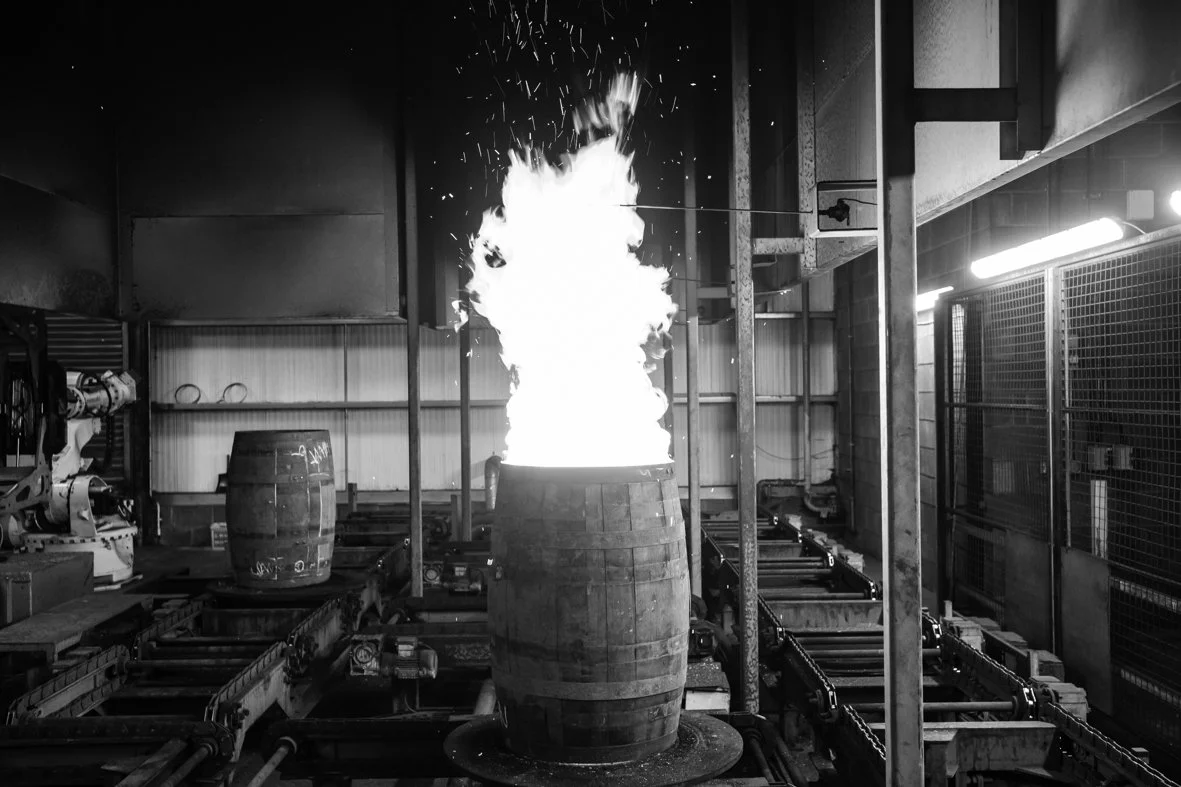
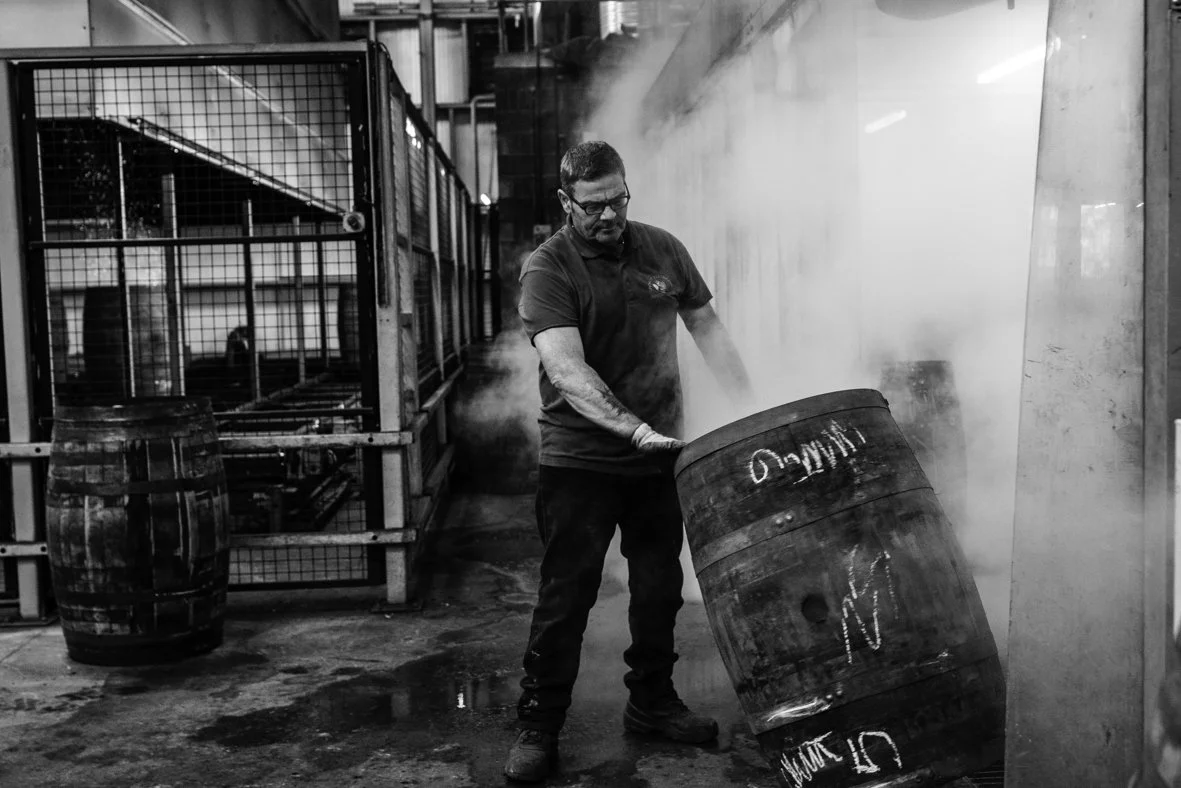
At the Speyside Cooperage, where I've spent numerous days photographing, men plane, hammer, drill, knock, smooth and fill in perpetual motion, working on one cask after another. "I don't have any trouble sleeping," one of them told me. That's no surprise once you've seen the effort it takes to hammer steel hoops into place to ensure a cask is watertight.
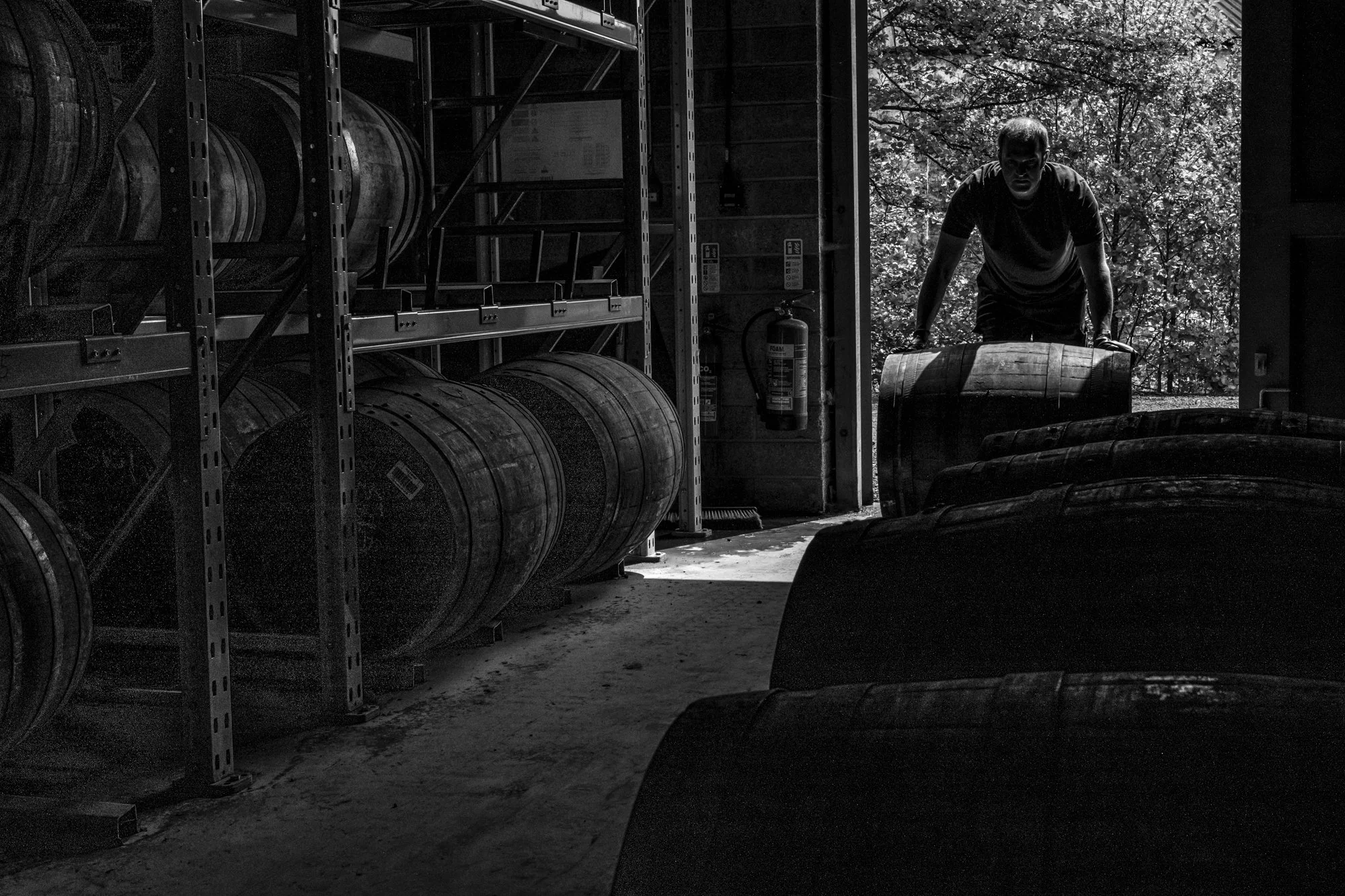
Machines handle only the jobs that can sensibly be automated, which is mainly work to repair the metal hoops. Each cooper works alone, responsible and accountable for the quality of his own casks, handing them over only to have their seals tested before they're rolled into the yard before being delivered to distilleries like Edradour.
Patience
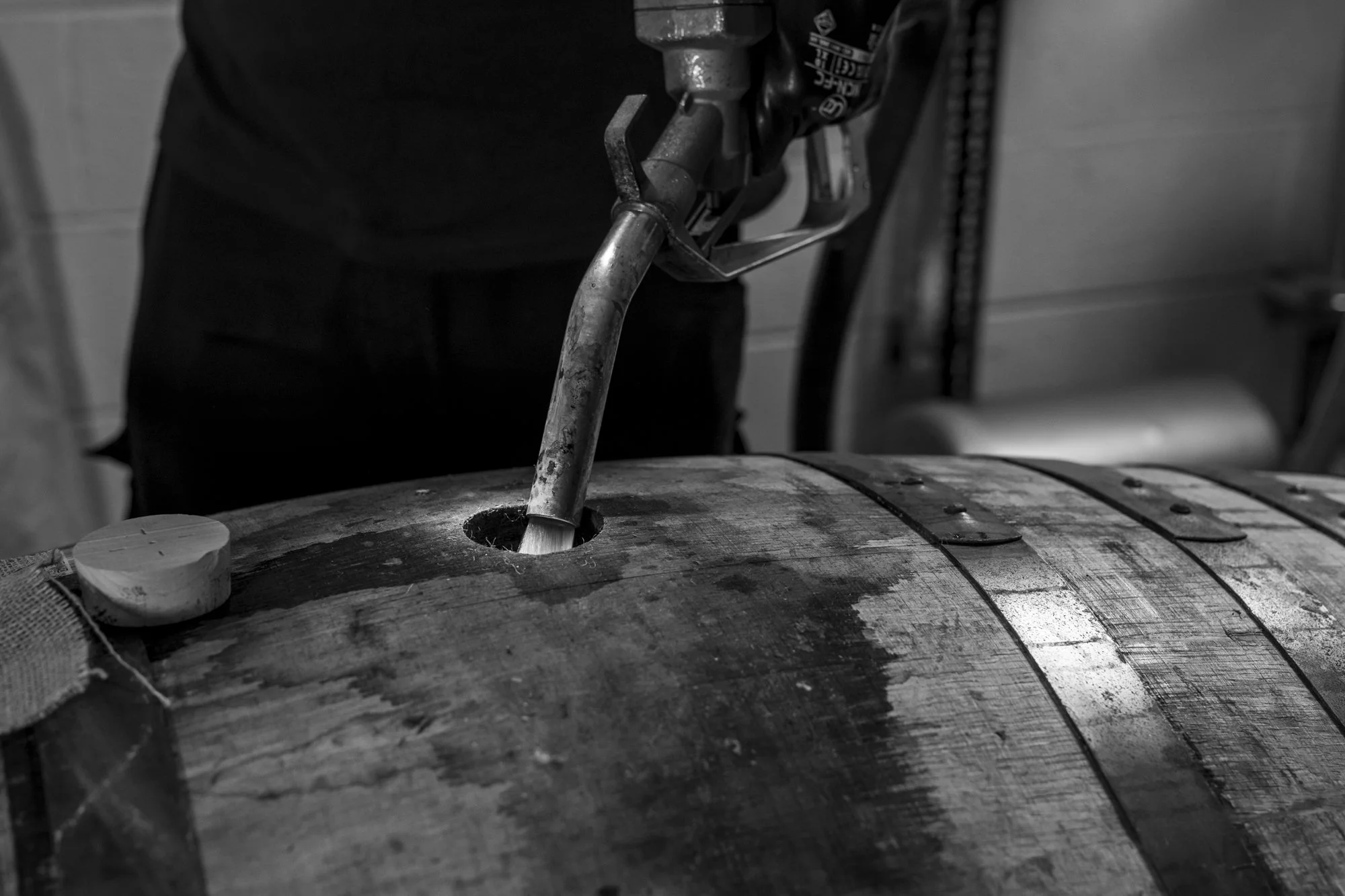
Back at Edradour casks are rolled into the filling store to be filled by hand one at a time with simple instruments, labelled and rolled out again to the top warehouse, exactly as they have been for decades.
It takes just a few days to turn sacks of malted barley into casks of clear spirit. It takes at least ten patient years, and the oak the coopers worked so hard on, for that spirit to become the golden dram that whisky lovers pour into their glasses.
Temporary custodians
On their own, distilleries and cooperages are just spaces full of vessels, pipework and stacked wood. It's the people who bring them to life: the stillman's twist of a wheel, a gentle nudge of a lever, a dip to measure, a sniff and a swirl; the cooper's steady rhythm of hammer on hoop. For an industry that sells its product all over the world, a remarkable amount still depends on senses and skills learned over years.
Every owner, stillman and cooper puts something of themselves into the whisky through the decisions they make. But they all know they are merely temporary custodians of a story with many chapters still to be written.